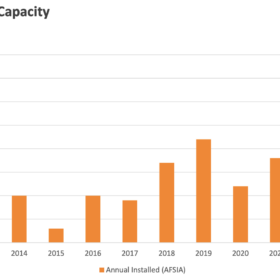
Africa’s installed PV capacity estimated above 63 GW
The Africa Solar Industry Association (AFSIA) has now identified 23.4 GW of operational solar projects across the continent but when taking into account Chinese PV export data, estimates total installed capacity in Africa could reach over 63 GW.
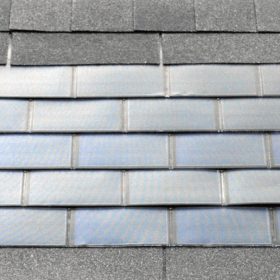
IEA PVPS invites modelers to join first coloured BIPV intercomparison
IEA-PVPS Task 15 has launched its first modeling intercomparison exercise on coloured building-integrated photovoltaics (BIPV) and is inviting PV modelers and researchers to evaluate their methods using real-world performance data.

MGM Resorts achieves 100% daytime solar power on Las Vegas strip
Output from Estuary Power’s recently-completed Escape Solar and Storage project more than doubles MGM’s share of solar energy.
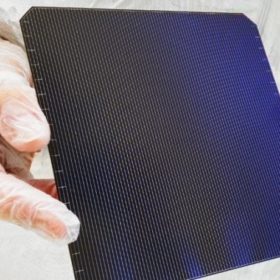
French scientists discover new UV-induced degradation pathways in heterojunction solar cells
Scientists from French research institute CEA-Liten have identified hydrogen migration in doped selective layers as the primary driver of UV-induced degradation in silicon heterojunction solar cells. They have also found that combined light and thermal light-soaking treatments can partially restore performance and improve long-term UV stability.

Australian startup moves forward with perovskite solar manufacturing plans
Halocell Energy is set to benefit from the development of a sovereign supply chain for high-purity precursors to perovskite after signing a memorandum of understanding with Queensland advanced materials company Lava Blue.

Italy installs 6.4 GW of PV in 2025
The country reached a cumulative installed PV capacity of 43.5 GW at the end of December, according to new figures released by Italian grid operator Terna.

Scientists achieve 32.6% efficiency in perovskite-silicon tandem solar cell via interface engineering
Researchers from KAUST, TU Delft, and LMU Munich have improved the performance of monolithic perovskite-silicon tandem solar cells by modifying the physical structure at the front of the bottom heterojunction solar cell.

Hungary adds 1.1 GW of solar in 2025
Hungary deployed over 1 GW of solar for the third consecutive year in 2025, driven largely by grid-scale solar additions. There are concerns momentum could slow in the coming years due to no new connection permits for large-scale projects authorized over the last three years.
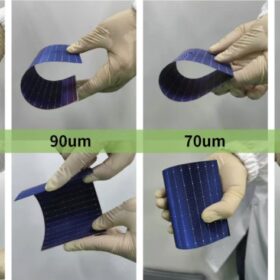
Ideal Energy commissions AI-enabled flexible HJT pilot line for space
China-based PV equipment supplier Ideal Energy (Shanghai) Sunflower Semiconductor has completed an AI-enabled pilot line for ultra-thin, flexible heterojunction (HJT) solar cells, targeting lightweight power systems for space and near-space applications.
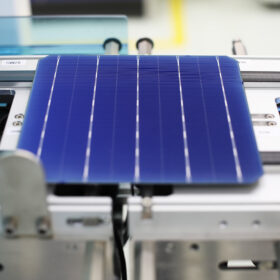
More PV manufacturers expected to adopt copper metallization in 2026
Rising silver prices are pushing PV manufacturers toward copper-based metallization, with DK Electronic Materials targeting 2026 for large-scale deployment of high-copper paste solutions, while Fraunhofer ISE warns efficiency trade-offs remain unacceptable.
