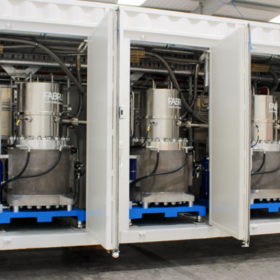
Airport-based green hydrogen test plant paves way for zero emissions aviation
Aotearoa-based green hydrogen solutions company Fabrum has opened an advanced liquid hydrogen test facility in partnership with Christchurch International Airport, believed to be the first at an airport that can provide hydrogen on demand.

Slovenia allocates €20 million for renewable electricity, heat
Slovenian electricity market operator Borzen has shared details of a forthcoming €20 million ($20.9 million) fund that will support the installation of heat pumps and solar thermal collectors, alongside other renewable energy devices. Applications for the subsidy will open Mar. 18, 2025.
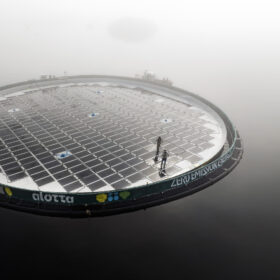
Contract signed for world’s northernmost floating solar plant
The 160 kW floating solar system, from Norwegian renewable energy company Alotta, will be deployed off the Norwegian coast, helping to reduce the diesel and CO2 consumption at a site belonging to a fishing company.
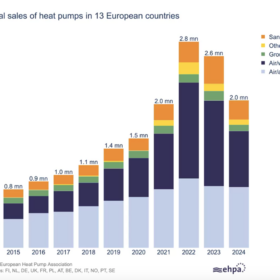
Heat pump sales dropped across large European markets in 2024
Analysis by the European Heat Pump Association found sales of heat pumps across the 13 main European markets, that make up around 85% of the total European market, fell by an average of 23% year-on-year in 2024, with the UK the only one to buck the trend.
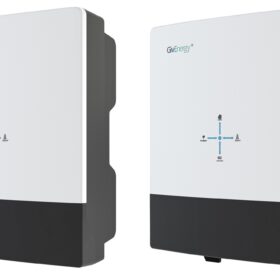
GivEnergy launches Gen 3 hybrid inverters for pairing with stackable storage
The new single phase hybrid range includes 8 kW and 10 kW models.

TrinaTracker establishes 3 GW factory in Saudi Arabia
The facility will manufacture TrinaTracker’s Vanguard series of solar trackers and smart control systems. Commercial operation is set to begin during the first quarter of this year.
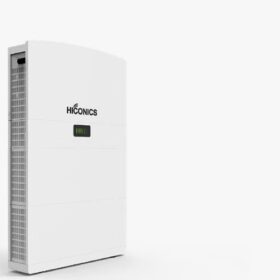
Midea Hiconics releases 30.6 kWh storage system for residential PV
The all-in-one single-phase system can take up to 3,750 W of PV input. It can be stacked with two to six batteries.
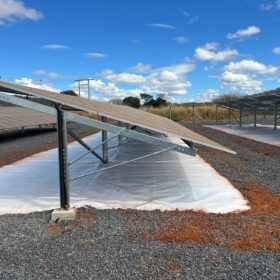
Brazilian plastics manufacturer offers reflective membrane for bifacial PV plants
Azul Pack has developed a new reflective membrane to increase albedo and energy yield in photovoltaic plants with bifacial modules. In a fixed structure plant located in Minas Gerais, the technology reportedly resulted in a 7% increase in energy at the inverter output.

New study shows reducing number of solar modules per string reduces risk of hotspots
Scientists in Indonesia have investigated early operational defects in a 24.9 MW solar PV system in Sumatra and have identified hotspot formation as the dominant defect. They also detected 282 cases of glass cracking, 350 cases of junction box failures and shading effects linked to module defects.
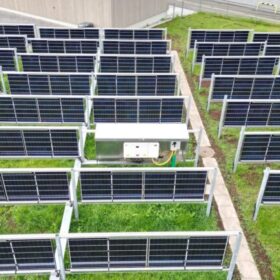
Swiss consortium switches on vertical solar-plus-storage project
The Baumgarten solar project consists of a 366 kW ground-mounted vertical PV array and a 2.5 MW/3 MWh storage facility.
