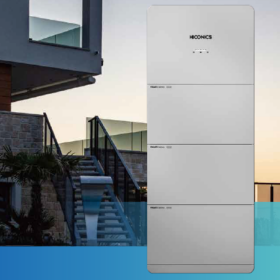
Midea Hiconics presents new three-phase residential storage systems
The company said its new Hienergy Series G2 product has a PV input ranging from 10 kW to 30 kW and storage capacity spanning from 5 kWh to 20 kWh. Maximum efficiency is rated at 97.5%.
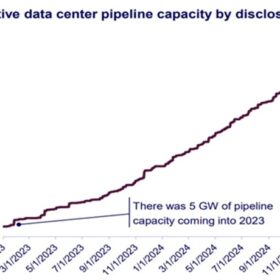
Data center capacity soaring, along with investment and land use
According to a new Wood Mackenzie report, data centers developed since 2023 exceeded 92 GW of capacity at the end of 2024.
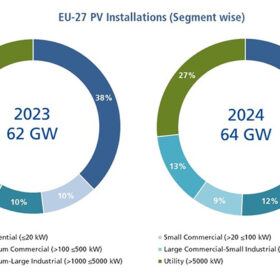
Are stakeholders ready for the segmental shift transpiring in the European PV and battery storage markets?
Many top European markets known for their dominant residential segments are prioritizing larger-scale projects, particularly in the commercial & industrial (C&I) and utility-scale segments. As this segmental shift gains momentum, the scale of investment and the complexity of maintaining projects in the new segment demand specific risk mitigation strategies. Consequently, investors, developers, EPCs, and—most importantly—C&I and utility-scale customers must reassess the criteria they use to select the most valuable and sustainable brands.

How much time do homeowners spend acquiring a rooftop PV system
Scientists have conducted a survey and analyzed transaction costs of residential PV projects. They focused on the time spent searching for and assessing information, as well as the time spent on aspects related to financing, permits, and contracts. Scoping information was the most time-consuming task.
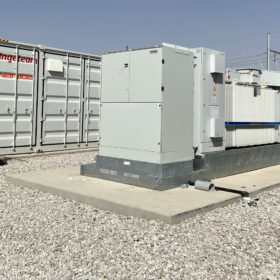
EU approves Spain’s €700m energy storage subsidy plan
The European Commission on Monday greenlit a new aid scheme to enable Spain to deploy large-scale energy storage with co-financing of up to 85%.

New way to improve accuracy of electricity price forecasts
Researchers at the European Commission’s Joint Research Centre (JRC) have developed a new filtering technique to improve electricity price forecasts by refining historical price data before applying predictive models.

Greece launches 4.7 GW utility-scale battery storage program
Following a brief consultation in late February, the Greek government has unveiled a new battery storage program targeting 4.7 GW of utility-scale, standalone projects which will be given a priority connection and operated on a merchant basis without subsidy support. The decision detailing the new program is the last policy made by the energy ministry before a cabinet reshuffle initiated last week.
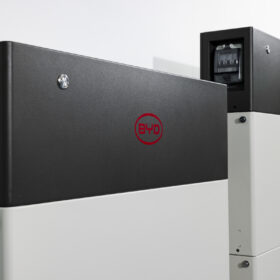
BYD launches its first integrated home storage system
The Chinese manufacturer said its Battery-Box HVE is now being sold with either a single-phase hybrid inverter or a three-phase device. The system is available in two versions with capacities of 4.29 kWh and 6.45 kWh.
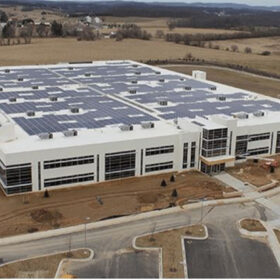
C&I solar grows 18% in the United States in 2024
Distributed solar fell 11% in 2024, dragged down by the residential segment, according to Ohm Analytics’s report on the fourth quarter of 2024. However, signs of recovery emerged with a strong fourth quarter and increasing installation volumes throughout the year.
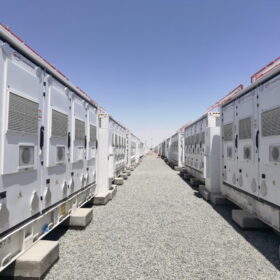
Poland finalizes 5 GWh energy storage subsidy scheme
A total of PLN 4 billion ($1 billion) will be distributed under the subsidy scheme by the end of 2025 in a bid to bring online more than 5 GWh of energy storage projects by 2028.
