
Florida utility on pace to reach 93 GW solar, 50 GW storage by 2045
While utilities in neighboring states are “dabbling” with solar, Florida Power & Light is combining solar and storage as a “workhorse” technology, said a nonprofit executive.
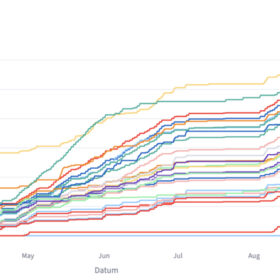
Europe faces surge in negative power prices as solar output grows
Sweden, the Netherlands, Germany, Spain, and France have each logged more than 500 hours of negative electricity prices this year, driven by excess renewable generation and volatile weather.

GoodWe debuts PV-driven heat pump water heaters
The Chinese manufacturer said their new residential heat pump water heaters deliver a coefficient of performance of up to 4.2, with a heating capacity ranging from 4.5 kW to 5 kW. The units are available with water tanks in 200 L, 300 L, and 500 L sizes.
France revises off-peak hours to match solar generation patterns
French grid operator Enedis will shift off-peak hours to daytime periods to align power demand with rising solar output and reduce evening consumption peaks.

Crystalline silicon vs. thin film at high latitudes
A four-year analysis conducted at a testing field in eastern Poland has shown that crystalline solar panels offer a stronger performance than thin-film panels at high latitudes. The tests revealed pronounced seasonal variability across all technologies, with thin-film modules showing markedly lower capacity factors than crystalline silicon, particularly in winter.
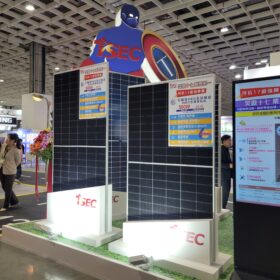
TSEC unveils typhoon resistant glass-glass solar modules
The Taiwanese manufacturer showcased the new module range at Energy Taiwan trade show. Two modules in the lineup boast a wind resistance of 17 on the Beaufort scale, making them typhoon ready, according to the company.

‘There really is a place for everyone in solar’
This week Women in Solar+ Europe gives voice to Rachel Hayes, the Head of the Environmental, Social, and Governance (ESG) team at Solar Energy UK. She says careers in solar often evolve laterally, from project development to ESG, from engineering to policy, reflecting how transferable and rewarding these roles are. “The challenge isn’t retention; it’s entry,” she states.
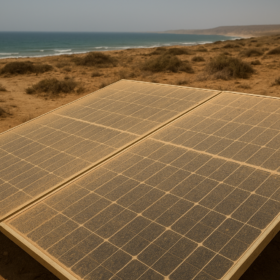
The impact of dust on PV systems in arid coastal environments
A Saudi–Egyptian research team investigated the effects of four types of dust on photovoltaic panels in arid coastal environments, finding that power losses can reach up to 48%.

Mitsubishi presents new residential air-to-water heat pumps
Mitsubishi said that the two new products of its Hydrolution EZY series can produce domestic hot water up to 75 C when outdoor temperatures reach -25 C. The new systems have capacities of 6 kW and 7.1 kW.

World’s largest heat pump under development in Germany
The 162 MW project is being developed by German utility MVV Energie. The system will use water from the Rhine river as a heat source and is expected to generate heat with temperatures of up to 130 C.
