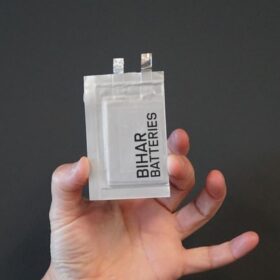
Spanish start-up Bihar Batteries to commercialize sodium-ion batteries in 2026
The company has produced its first sodium-ion battery prototype and, in collaboration with Spanish research institute CIC energiGUNE, developed sodium-ion cell prototypes that have shown “very promising results.”
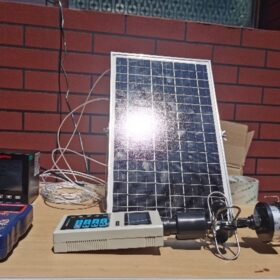
How to reduce PV module temperature with frame perforations
Scientists in China have investigated how frame perforations can help reduce the operational temperatures of solar modules through air cooling. Their findings show that the number of perforations must be carefully calibrated, and that more is not necessarily better.

Bosch starts up 2.5 MW hydrogen electrolyzer in Germany
German industrial group Bosch says the Bamberg facility complies with European Union renewable hydrogen rules and will produce over one ton of green hydrogen daily.
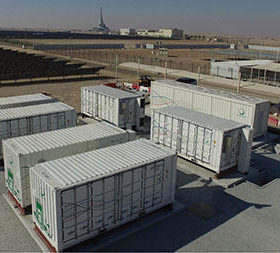
Japan’s NGK discontinues manufacturing of sodium-sulfur batteries
The manufacturer cites rising material costs, heightened competition from lithium-ion batteries, and the slow uptake of long-duration storage technologies as the reasons for the decision.

Field trial shows third-party control of residential heat pumps can provide grid flexibility
UK researchers find that smart, centrally controlled air-source heat pumps could slash peak electricity demand. The technology not only keeps homes comfortable but also boosts grid flexibility and cuts emissions.
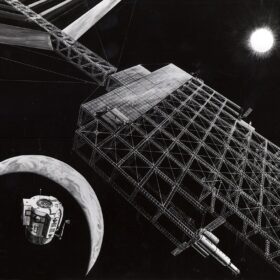
Musk proposes PV-powered AI satellite network to fight global warming
Elon Musk says a constellation of solar-powered artificial intelligence satellites could regulate the planet’s energy balance and limit global warming.

AlphaESS launches all-in-one storage systems for C&I applications
Chinese energy storage manufacturer AlphaESS says its new Storion-H30-G3 and Storion-H50-G3 systems combine full integration, higher efficiency, and modular scalability to improve project safety and returns for commercial and industrial (C&I) users.
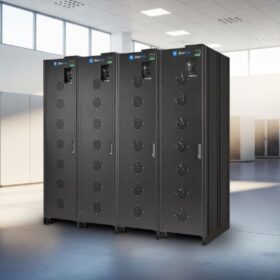
ZincFive unveils BC 2 AI battery system for both AI and traditional IT loads
The new nickel-zinc (NiZn) battery cabinet provides support for high-intensity AI pulses while also offering traditional IT backup within a compact footprint.

GSE Intégration debuts reversible, concrete-free solar mounting in France
GSE Intégration has introduced a new version of its ground-mounted photovoltaic structure, the GSE Ground System Evolution. It is designed for faster installation and compliance with France’s soil conservation laws.

Four-year testing finds heat pumps run efficiently even in older homes
Researchers at Fraunhofer ISE have tested various types of heat pumps in existing buildings across Germany over four years, finding that the systems achieved seasonal performance factors between 2.6 and 5.4. The team also showed that PV-driven heat pumps can boost self-consumption rates, particularly when paired with battery storage.
