
Panasonic exits solar and battery storage
Panasonic has told its installation partners that it will no longer produce products for the residential solar and storage markets, but will continue to offer warranty and installation support for existing and ongoing projects.

Colombia approaches 2 GW solar capacity milestone
Colombia is approaching 2 GW of cumulative installed PV capacity, with 1.34 GW currently operational and an additional 700 MW in testing, according to the country’s grid operator.
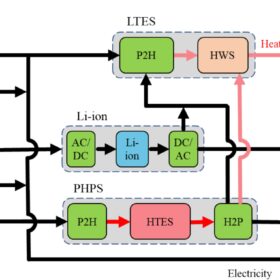
How to integrate solar-plus-storage with heat pumps
Scientists in Spain have simulated a system that uses both power-to-heat-to-power thermal batteries and lithium-ion batteries for energy storage. The hybrid system reportedly achieved a 7% lower LCOE compared to a PV system relying solely on lithium batteries, while simultaneously increasing PV self-consumption by up to 20%.
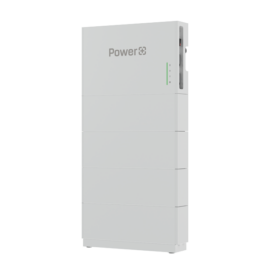
PowerPlus presents residential hybrid inverter, battery solution
Australian battery designer and manufacturer PowerPlus Energy has unveiled a new all-in-one energy storage solution featuring a single-phase 7 kW inverter and a 13.4 KWh stackable battery.

Low residential solar feed-in tariffs can encourage battery deployment
Analysis of feed-in tariff scenarios in Central and Eastern Europe finds that while high feed-in tariffs are linked to the adoption of residential solar, lower tariffs are more likely to encourage battery installations. The study proposes a moderately low range of tariffs as one compromise to support both technologies.
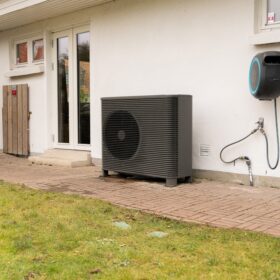
UK unveils ‘smart ready’ heat pump regulations, new utility flexibility rules
Heat pump manufacturers will need to meet ‘smart ready’ standards under new appliance regulations, including stricter rules on cybersecurity. Utilities will be obligated to ensure battery energy storage systems, heat pumps and electric vehicle smart charge points can work across different tariffs under tariff data framework.

Viessmann launches new residential air-to-water heat pumps
The Germany manufacturer said its new heat pump systems use propane (R290) as the refrigerant and are able to provide a maximum flow temperature of 70 C. Their coefficient of performance ranges from 4.7 to 5.1.
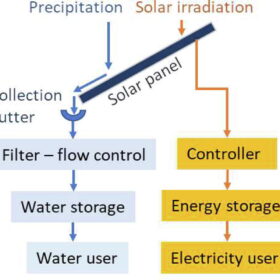
How to combine photovoltaics with rainwater harvesting
Scientists have developed a system that harvests rainwater running off PV panels for household use or hydrogen production. Their analysis showed that, in the southern Sahel, the system can meet both the energy and water requirements for electrolysis, with surplus rainwater covering up to 50% of a household’s daily water demand.

US-based Complete Solaria rebrands as SunPower
Complete Solaria says it acquired SunPower’s assets for $45 million after its bankruptcy, then sold its shingled module patents to Maxeon, which is now owned by China’s TCL Group.

Austria launches €60 million rebate program for rooftop PV in 2025
Austria has opened applications for its €60 million ($68.3 million) rooftop PV rebate program for 2025, with a second-round “Made in Europe” bonus offering 20% more funding for projects using European-made components, says OeMAG.
