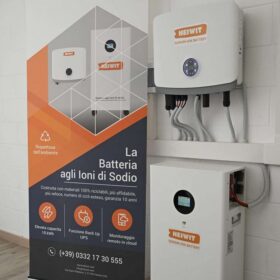
Italian startup releases 9.8 kWh sodium battery for residential applications
Italy-based Heiwit has developed a 200 Ah sodium-ion battery with a lifespan of 6,000 cycles. The device reportedly offers thermal stability and rapid charging speed.
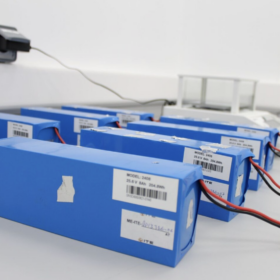
Spanish lab develops sodium-ion cell with sustainable materials
Spain’s Instituto Tecnológico de la Energía (ITE) has built a prototype sodium-ion battery cell using high-potential materials and a sustainable polymer-based separator, as part of the SOSBAT project to develop alternatives to lithium-ion storage.
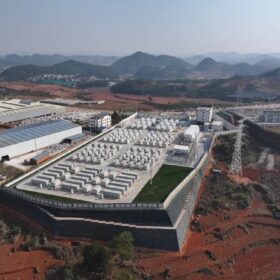
China launches world’s first grid-forming sodium-ion battery storage plant
The Baochi Storage Station in Yunnan integrates lithium and sodium-ion technologies at scale, a global first, aiming to stabilize renewable energy and cut costs as China accelerates its energy transition.
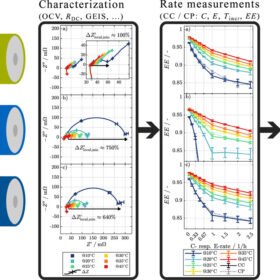
Sodium-ion vs. lithium-iron-phosphate batteries
Researchers in Germany have compared the electrical behaviour of sodium-ion batteries with that of lithium-iron-phosphate batteries under varying temperatures and state-of-charges. Their work shows how state-of-charge during cycling significantly affects the efficiency of sodium-ion devices.
German project for fast industrial implementation of sodium-ion battery technology
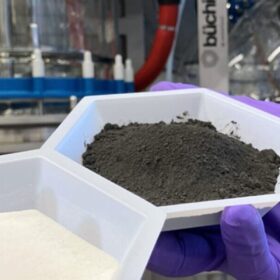
Cheap, safe, widely available sodium could be used for battery energy storage alongside photovoltaics. The Sodium-Ion-Battery Germany (SIB:DE) Research project is investigating whether sodium-ion technology can be affordably integrated into lithium-ion battery production facilities.

Sodium-ion batteries face uphill struggle to beat lithium-ion on cost
A new Stanford University study finds that there are several several key routes that sodium-ion battery developers can take to compete on price, specifically against a low-cost variant of the lithium-ion battery known as lithium iron phosphate (LFP).
Sodium-ion batteries key for India’s storage manufacturing ambitions
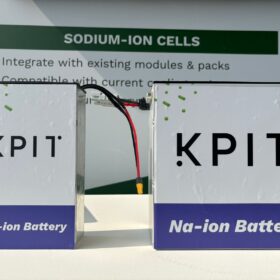
A new report says sodium-ion batteries (SIBs), made from abundant materials, could help India to reduce its dependence on imports to meet its energy storage needs.
German initiative to develop scalable sodium-ion batteries
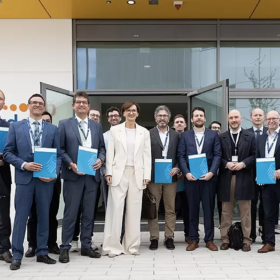
A collaborative project led by German battery supplier Varta aims to develop industrial-scale sodium-ion battery technology. The final product of the three-year, €7.5 million ($8.08 million) project will be a small series of round cells for electric vehicles and stationary storage systems.
Dutch solid-state battery maker acquires factory in Scotland
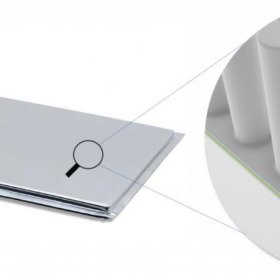
Dutch startup LionVolt has acquired AMTE Power’s battery cell production line in Scotland. It says it will use the assets for pilot production of its 3D solid-state thin-film batteries.

The case for hard carbon-based sodium-ion batteries
Researchers in China have summarized the technical issues hindering the development of hard carbon, which is regarded as the most promising anode for high-performance, commercial sodium-ion batteries.
