
Self-interest key to maximizing rooftop solar installations
Researchers in Switzerland have found that the most effective way for governments to nudge homeowners into installing rooftop solar PV sytems hinges on individuals being told how much money they’ve lost by not getting it sooner.
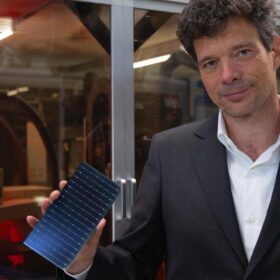
SolarWatt launches TOPCon module production
SolarWatt has started production of TOPCon modules, with plans to manufacture both glass-glass and glass-backsheet versions. It says it aims to make its first shipments in January 2024.
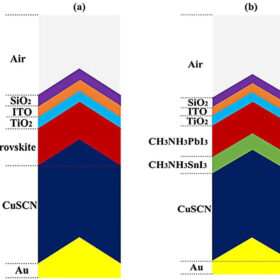
New perovskite solar cell design with silicon dioxide anti-reflector layer
Researchers in Iran have designed a new light trapping (LT) structure for perovskite solar cells that reportedly achieves optimal light absorption without impacting the electrical properties of the cells. The key element of the device is an anti-reflector layer based on silicon dioxide (SiO2) that improves light harvesting and charge extraction performance.
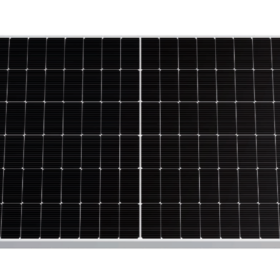
India’s Gautam Solar to expand PV module capacity to 2 GW
Gautam Solar says it will invest $18.1 million to double its annual PV module production capacity to 2 GW.
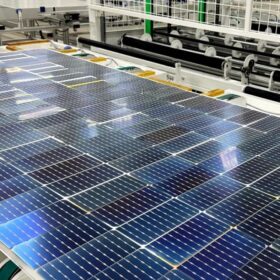
SolarSpace launches first phase of 5 GW solar factory in Laos
SolarSpace, a China-based PV cell and module manufacturer, announced the first phase of a 5GW high-efficiency solar cell plant in Laos, giving momentum to its overseas production capacity.

Carbon electrode perovskite solar cells on track to commercialization
Carbon electrode back-contacts for perovskite solar cells promise simpler, less energy-intense manufacturing, but low power conversion efficiency has held back adoption. However, this may change now, as researchers are overcoming the barriers to commercialization.
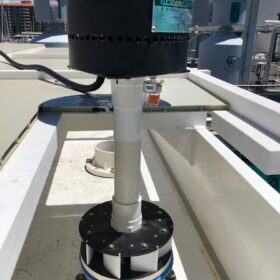
Solar-linkable pico-hydro turbine system for commercial buildings
Scientists in Australia have proposed to use a a propeller pico-hydropower turbine to recover the energy used for pumping water in a solar-powered commercial building. They have found that the mini hydro system is a relatively low-cost solution, able to recover approximately 10% of the energy used for pumping seawater.
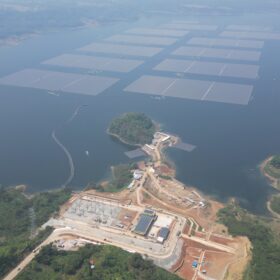
Indonesia’s largest floating solar plant to expand to 500 MW
Abu Dhabi-based Masdar and PLN Nusantara Power, an Indonesian state-owned electricity generator, have agreed to more than triple the size of the Cirata floating PV power plant in West Java so it can generate 500 MW.

Chinese PV Industry Brief: TCL Zhonghuan, Longi lower wafer prices
This week, Longi and TCL Zhonghuan reduced slightly the prices of their wafer products. Meanwhile, the China Photovoltaic Industry Association reports strong ouput growth for the solar industry.
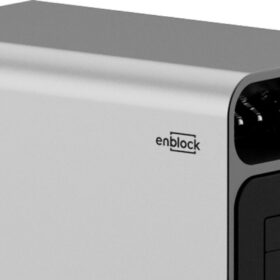
LG Energy Solution to offer lithium iron phosphate batteries in Europe
LG Energy Solution will soon release its lithium iron phosphate batteries in the European market, featuring compatibility with single-phase and three-phase inverters. The South Korean manufacturer will offer two configurations, with capacities of 12.4 kWh and 15.5 kWh.
