Alpex Solar to set up second panel factory in India
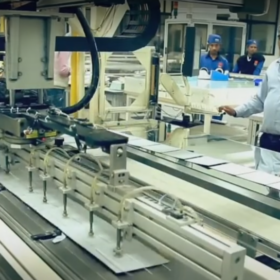
Alpex Solar has secured land to set up a solar panel manufacturing facility in Uttar Pradesh, India.
PI Berlin, PVEL, Extel Energy unite under Kiwa brand
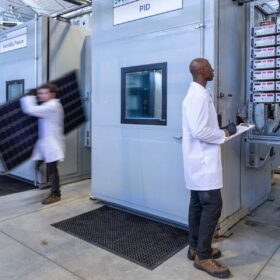
PV Evolution Labs (PVEL), Extel Energy, and PI Berlin have unified under the Kiwa brand. Dutch company Kiwa, which has acquired the three PV testing laboratories over the past three years, says it aims to more effectively present its range of services for the solar industry.
Solplanet launches new inverters for rooftop installations
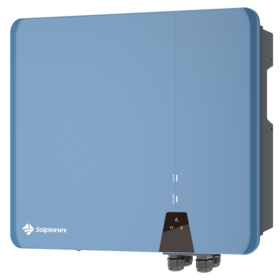
Solplanet, a China-based inverter manufacturer, says its new three-phase hybrid inverter series includes four versions with power ratings of 25 kW to 40 kW. They feature efficiencies of up to 98.4% and a maximum input voltage of 1,100 V.

Asunim to build 40 MW solar project at wind farm in Turkey
Ankara-based renewable energy developer Asunim will construct the 40 MW solar plant at an existing wind power plant in northwestern Turkey. The solar-wind hybrid is expected to be completed within five months.
Malaysia launches 2 GW solar tender
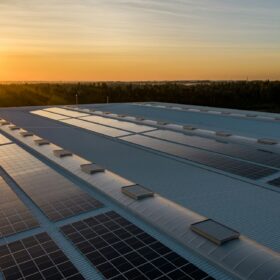
The Malaysian government has kicked off a 2 GW solar tender featuring four packages of rooftop, ground-mount, and floating solar, with permitted generation capacities ranging from 1 MW to 500 MW.
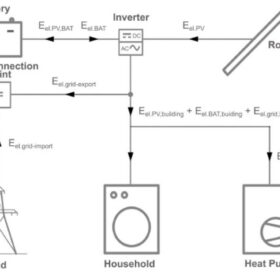
Residential heat pumps linked to solar-plus-storage achieve higher seasonal performance factor
Researchers at Germany’s Frauhofer ISE have analyzed the performance of a residential heat pump connected to a rooftop PV system relying on battery storage and have found that this combination significantly improves the performance of the heat pump while also increasing considerably the solar array’s self-consumption rate.

Off-grid solar bench with wireless charging
Bluebolt Outdoor has supplied benches powered by off-grid solar to a university in California.

Cameroon exempts imported PV components from customs duties
PV modules, inverters, charge controllers, batteries and cables intended for rooftop solar systems will benefit from exemptions from customs duties until 2025.
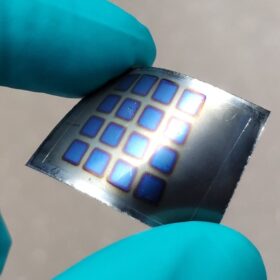
Perovskite-CIGS tandem solar cell based on fexible steel substrate achieves record-breaking efficiency of 18.1%
Scientists in Australia claim to have achieved the highest efficiency ever reported to date for a perovskite-CIGS tandem solar cell built on a flexible steel substrate. In the proposed cell configuration, steel can act as both a substrate and an electrode.
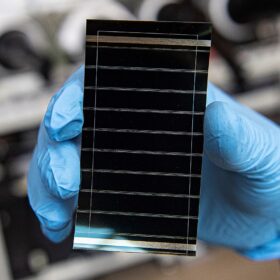
Researchers discover additive that enhances perovskite coating process
By adding an ionic pair stabilizer to perovskite cells enables coating to take place in ambient air, simplifying the manufacturing process.
