
Home batteries have same probability of catching fire as other appliances
New research from Germany shows that home batteries have much lower chances of being hit by fire than electric vehicles and most home appliances. The researchers warned, however, that fires in residential storage systems can be more dangerous than those of burning tumble dryers.

New web tool helps find best tilt angle for south-facing bifacial PV plants
An international research team has created a new model that finds the best tilt angle for south-facing bifacial PV plants across Europe. The scientists also considered the Alpine region to examine the impact of mountains on optimal tilt angles.
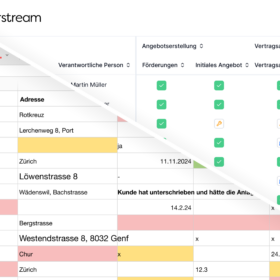
Swiss startup offers project management software for solar installers
Software company Solarstream provides a project management tool for installation teams, including traditional PV installers and electricians serving the solar market. The software is suitable for projects of all sizes, from large-sized commercial and industrial to residential installations.
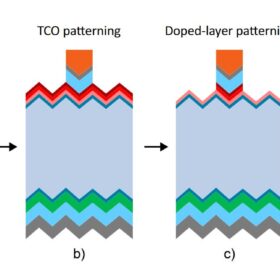
TU Delft researchers build 23.4%-efficient heterojunction solar cell with localized front contacts
Researchers at the Delft University of Technology have developed a top-down processing method localized the front contact in heterojunction solar cells. The new technique reportedly improves a cell’s short-circuit current density enabling higher power conversion efficiency.

Chinese PV Industry Brief: New solar additions hit 59.71 GW in Q1
China installed 59.71 GW of new solar in the first quarter of 2025, with 20.24 GW in March alone. National power generation capacity reached 3.43 TW, with solar accounting for 950 GW of the total.
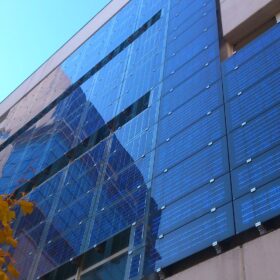
Spain hits first weekday of 100% renewable power on national grid
Spain’s grid ran entirely on renewable energy for the first time on April 16, with wind, solar, and hydro meeting all peninsular electricity demand during a weekday. Five days later, solar set a new record, generating 20,120 MW of instantaneous power – covering 78.6% of demand and 61.5% of the grid mix.
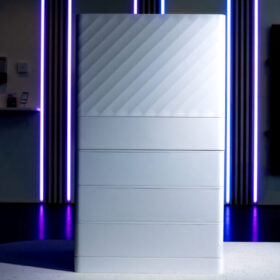
1Komma5° releases residential battery for non-PV homeowners
1Komma5° has launched PowerHarvester, a lithium iron phosphate battery system for residential customers without solar. It is offering six power classes and storage capacities from 7.7 kWh to 27.2 kWh.
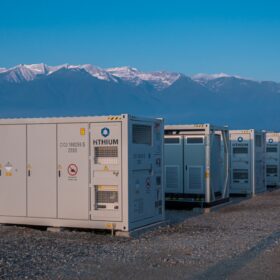
Bulgarian tender awards nearly 10 GWh of energy storage
Bulgaria’s standalone energy storage tender, which aimed to procure at least 3 GWh of cumulative usable capacity, ultimately awarded more than three times that amount.
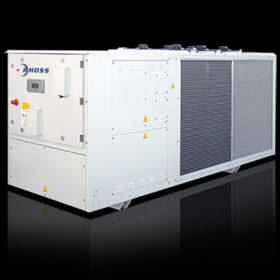
Rhoss launches reversible heat pumps
Conceived for industrial applications, the novel heat pumps can reportedly deliver hot water at 65 C from -10 C up to 35 C of external air, and hot water at 55 C down to -20 C of external air. Their coefficient of performance reaches up to 3.60.

Low-cost conductive quantum dot inks for photovoltaics
An international research team has developed a method to economically synthesize and stabilize conductive colloidal quantum dot inks for solar applications. When used to make quantum dot films in large area PV devices they enabled a certified efficiency of 10%, with lab-sized cells based on the ink material achieving 13.40% efficiency.
