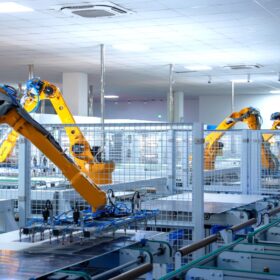
SEG Solar begins work on 5 GW solar cell factory in Indonesia
SEG Solar (SEG), a Texas-based module manufacturer, has started deploying n-type cell production lines in Indonesia’s Kawasan Industri Terpadu Batang industrial park, 390 km east of Jakarta.

Why $0.25 per kWh electricity makes off-grid solar-plus-storage a smart investment in U.S.
Once electricity prices hit $0.25/kWh, disconnecting from the grid with residential solar-plus-storage starts to become financially viable, with sunny places making strong financial arguments. With recent drops in battery prices, the case for leaving the grid has grown even stronger.

California’s Governor rules that schools and farms cannot use their own solar energy production
Gavin Newson rejected a bill that would restore a level playing field for schools, farms, and multi-family homes to go solar

Key takeaways from Solar & Storage Live, UK
There’s a rejuvenated feeling in the UK solar market where a new government is making positive signals and considering key policy changes aimed at speeding up project commissioning. For storage, there’s still serious interest in utility-scale deployment with some significant projects in the pipeline.
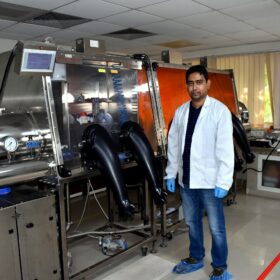
Indian researchers present 28%-efficient silicon-perovskite tandem solar cell
A research group at the Indian Institute of Technology Roorkee has fabricated 4-terminal silicon-perovskite tandem solar cells with power conversion efficiency of 28%. The team is now scaling up this technology to match 18.2 cm x 18.2 cm, commercial M10 solar cells dimension.
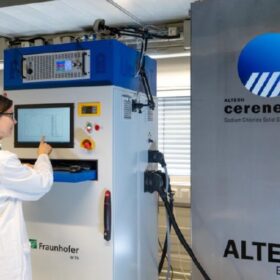
Altech’s sodium chloride solid state battery exceeds expectations
Western Australian battery technology company Altech Batteries has announced its first Cerenergy ABS60 salt-based battery energy storage system prototype is online and operating successfully across a range of temperatures, confirming its thermal stability and commercial viability.
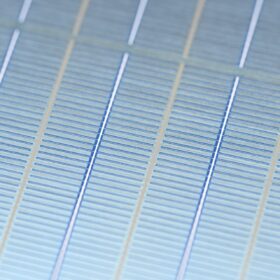
German startup unveils ‘self-aligned’ back-contact TOPCon solar cell
EnPV GmbH has developed a TOPCon solar cell concept featuring a novel type of back contact technology. The cell can reportedly be produced at signifcantly lower costs compared to conventional TOPCon cells and its manufacturinng process is claimed to be easy to introduce in existing TOPCon production equipment.

Philippines’ large-scale PV market sees project size largely increase
Philippines’ Department of Energy cleared 29 utility-scale solar projects in the January-August period. Most of them have a capacity of more than 180 MW and four of them even exceed 500 MW. The list also includes eight floating projects each exceeding 100 MW.
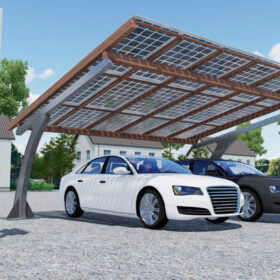
Gridparity launches modular solar carport
The German PV system provider said its new solar carport is an ideal solution for shopping centres, supermarkets or do-it-yourself stores. It was conceived to operate with either standard or semitransparent bifacial double-glass PV panels.

A few micrograms of particulates enough to affect PV power generation
New research from South Korea has shown that even a 10 μg/m3 increase in atmospheric particulate matter can considerably reduce solar power generation and impact revenue of PV system owners.
