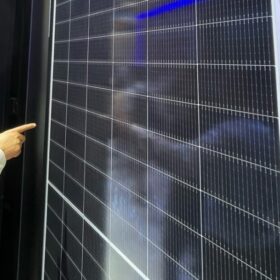
Longi achieves 34.6% efficiency for two-terminal tandem perovskite solar cell prototype
In a paper published in nature, the Chinese module maker explained that the 33.9%-efficient tandem device it unveiled in December 2023 is based on a bilayer intertwined passivation strategy that combines efficient electron extraction with further suppression of nonradiative recombination. It also revealed that its two-terminal tandem prototype devices achieved an efficiency of 34.6%.
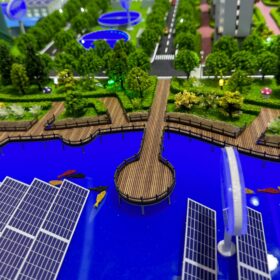
Optimizing bifacial solar panels for floating PV applications in tropical freshwater
New research from India shows how bifacial solar modules should be deployed to achieve strong performance in floating PV projects planned on tropical freshwater. Their experimental setup demonstrated that higher efficiency gains are achievable by gauging panel height, water depth, and tilt angle.
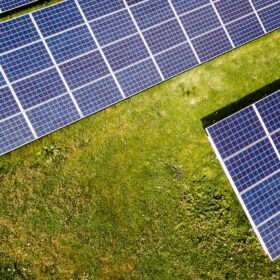
Alight to build 180 MW of solar in Finland
Swedish solar developer Alight plans to build two 90 MW solar projects in western Finland. Construction is set to begin next year, with commissioning expected in 2026.

Australian commercial indoor perovskite solar cells coming soon
Halocell Energy, an Australian perovskite solar cell developer, is close to bringing its first indoor solar product to market.

Webasto unveils vehicle-integrated PV system covering rear window, roof area
Webasto, a German automotive industry supplier and developer of vehicle integrated PV, unveiled a new sun roof system concept with components that are 40% lighter and a capacity of 350 kWh per year.
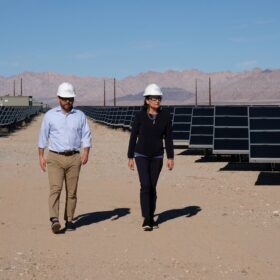
2.8 GWh collocated battery storage project lands US government approval
The US Department of Interior has given the green light to Nevada’s largest solar+storage development, the Libra Solar Project. It has also opened a comment period for the Bonanza Solar Project, which features a 195 MW/780 MWh battery storage system.

Silfab launches 640 W utility-scale solar panels
The Canada-based manufacturer said its new panels have a temperature coefficient of -0.29% per C and an efficiency of up to 22.92%. They come with a 30-year power output guarantee for 89.3% of the initial yield.
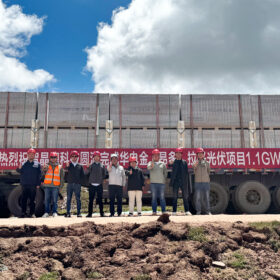
Construction begins on 1.1 GW solar project in Tibet
JA Solar has supplied its n-type DeepBlue 4.0 Pro modules for a 1.1 GW solar installation in Tibet. The project is believed to be the world’s largest combined animal husbandry facility and solar array now under construction.

Storage, hydrogen, and demand flexibility key to avoiding negative prices
Antonio Delgado Rigal, CEO of Spain’s AleaSoft Energy Forecasting, speaks with pv magazine about the rise in negative price hours in major European energy markets. He emphasizes the need for more storage capacity and argues that negative price periods will probably not threaten project profitability over the long term.
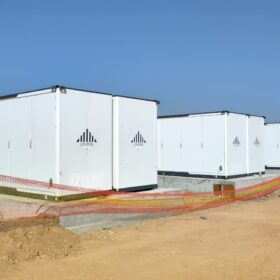
Brazilians ready to embrace storage amid rising energy bills, falling battery prices
The conditions are in place for the country’s battery energy storage market to expand at a compound annual growth rate (CAGR) of 20% to 30%, as Holu Solar’s Sophia Costa explained.
