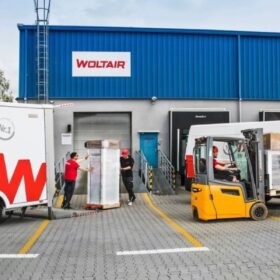
Woltair expands online heat pump, solar PV platform
After finding growth in its home market and Poland, Czech Republic-based Woltair raised venture capital to expand its heat pump and solar PV software platform, used by both installers and homeowners, into Germany and Italy.

First attempt to build inverted perovskite solar cell based on nickel oxides delivers 20.06% efficiency
Scientists in Colombia have proposed to develop inverted perovskite solar cells with a hole transport layer based on indium-doped nickel oxide. The result is a champion device achieving an efficiency of 20.06% and showing remarkable stability.
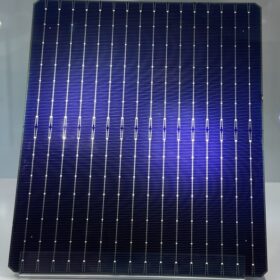
Chinese solar cell maker to build 10 GW factory in Oman
Chinese solar cell maker Hainan Drinda New Energy Technology plans to build a 10 GW factory in Oman to produce tunnel oxide passivated contact (TOPCon) solar cells.

Waaree Energies secures 412 MW solar module order
Waaree Energies says it has obtained a contract to supply its p-type bifacial solar modules for a 412.5 MW project that Acciona Energy is developing in Rajasthan, India.

Rooftop PV reduces building retrofitting costs by up to 50%
Cambridge researchers have analyzed the benefits of installing a PV system on the roof of an apartment building in addition to energy refurbishment and have found that photovoltaics, especially if combined with heat pumps, makes retrofit projects more affordable.
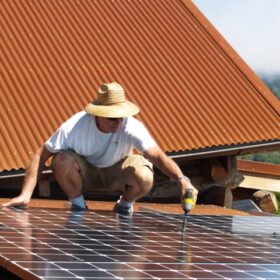
New US platform vets residential solar salespeople
An industry plagued by deceptive practices is now verifying salespeople via the Recheck platform.

Elements Green secures approval for 360 MW/720 MWh storage project in UK
UK-based solar and energy storage developer Elements Green has secured planning consent for its Staythorpe Battery Energy Storage System (BESS) project in the UK. The system will be colocated with a massive 800 MW solar farm.

RETC releases 2024 PV Module Index
Solar modules are evaluated in the Renewable Energy Test Center annual PV Module Index.

‘They are all selling below their cost prices’
In the second interview in a series held at Intersolar 2024, pv magazine spoke with Karen Tang, editorial director for Europe at US-based global energy price reporting agency OPIS, about the strong pressure on prices across all segments, including the downstream business. She defined the current market situation as “unhealthy” and “bleak” for the PV industry, although she acknowledged that overcapacity is also making solar extremely competitive compared to all other energy sources. Tang also expects pressure on electricity and gas prices to continue this year.

‘In the next year, some of these guys are going to be bankrupt’
At Intersolar in Munich, pv magazine spoke with Jenny Chase, solar analyst at BloombergNEF, about the incredibly low polysilicon prices, massive overcapacity, and increasing consolidation. According to Chase, this year there will be enough polysilicon capacity to produce 1.1 TW of solar modules, but global module demand is expected to reach around 585 GW. “That is a pretty huge delta,” she said, noting that the solar industry should also prepare for a series of “negative feedback mechanisms,” such as negative prices and excess of solar power.
