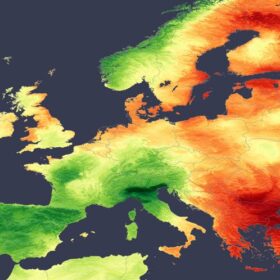
High pressure over Eastern Europe traps rain and cloud in the West
In a new weekly update for pv magazine, Solcast, a DNV company, reports that blocking high pressure over Eastern Europe in October created a strong east-west divide in solar irradiance across the continent. This led to notably lower irradiance due to persistent cloud cover and rainfall, especially across the Iberian Peninsula and northern Italy.

New grid forming strategy for solar batteries
A group of scientists from a major Chinese grid operator have proposed to use an enhanced version of the particle swarm optimization algorithm to adjust inertia and damping coefficients in batteries linked to PV systems. Their approach was validated through a series of simulation and was found to enhance transient performance.

SolarEdge posts $1.21 billion net loss in Q3
SolarEdge reported $260.9 million in revenue for the third quarter of 2024, down from $725.3 million in the same quarter last year. The Israeli manufacturer also posted an operating loss of more than $1 billion, with 850 MW of inverters and 189 MWh of batteries shipped for PV applications.

Tender opens for 17 solar systems in Mozambique
The United Nations Development Programme (UNDP) Mozambique is accepting bids to install 17 solar systems at selected health facilities across the country. The deadline for applications is Dec. 13.

Prefabricated modular balcony for PV systems
Spain-based Tecnalia has designed a balcony that integrates renewable energy systems, ventilation, and smart energy management. The innovative structure allows for the incorporation of sustainable technologies, providing both energy efficiency and environmental benefits.
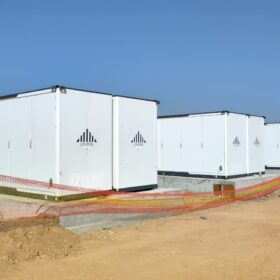
Indian state of Rajasthan tendering up to 2 GWh of battery storage capacity
State utility Rajasthan Vidyut Utpadan Nigam Ltd (RVUNL) is tendering for 500 MW/1 GWh of standalone battery energy storage systems (BESS) and may allot double that capacity, given sufficient demand.

Phnix presents new residential air-to-water heat pumps
The Chinese manufacturer said its new Heco series uses propane (R290) as a refrigerant and includes five models with a nominal capacity ranging from 6 kW to 17 kW.
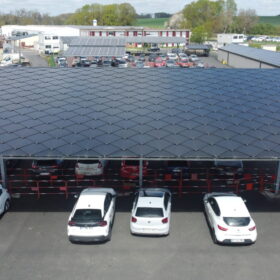
Solar tile carport for protected environmental areas
French companies Le Triangle Horizon and SunStyle International are offering a new carport based on solar tiles for areas protected by environmental regulations.
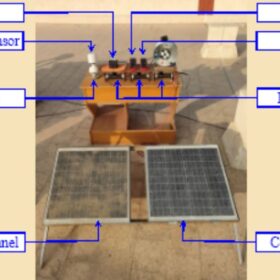
Anti-soiling coating increases PV panel current in arid regions by 64.7%
Scientists in Egypt have created an anti-soiling coating for solar panels by mixing ethanol, deionized water, ammonium hydroxide and tetraethyl orthosilicate. They tested a coated panel outdoors for ten months and found that the panel showed a 64.7% higher current compared to reference modules without coating.
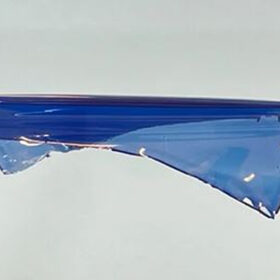
Japanese scientists build stretchable organic solar cell with 14.2% efficiency
Researchers in Japan have built a stretchable organic solar cell than can ensure high efficiency levels while preventing crack initiation and propagation. The cell was built with a hole transport layer based on PEDOT:PSS treated with a new additive type.
