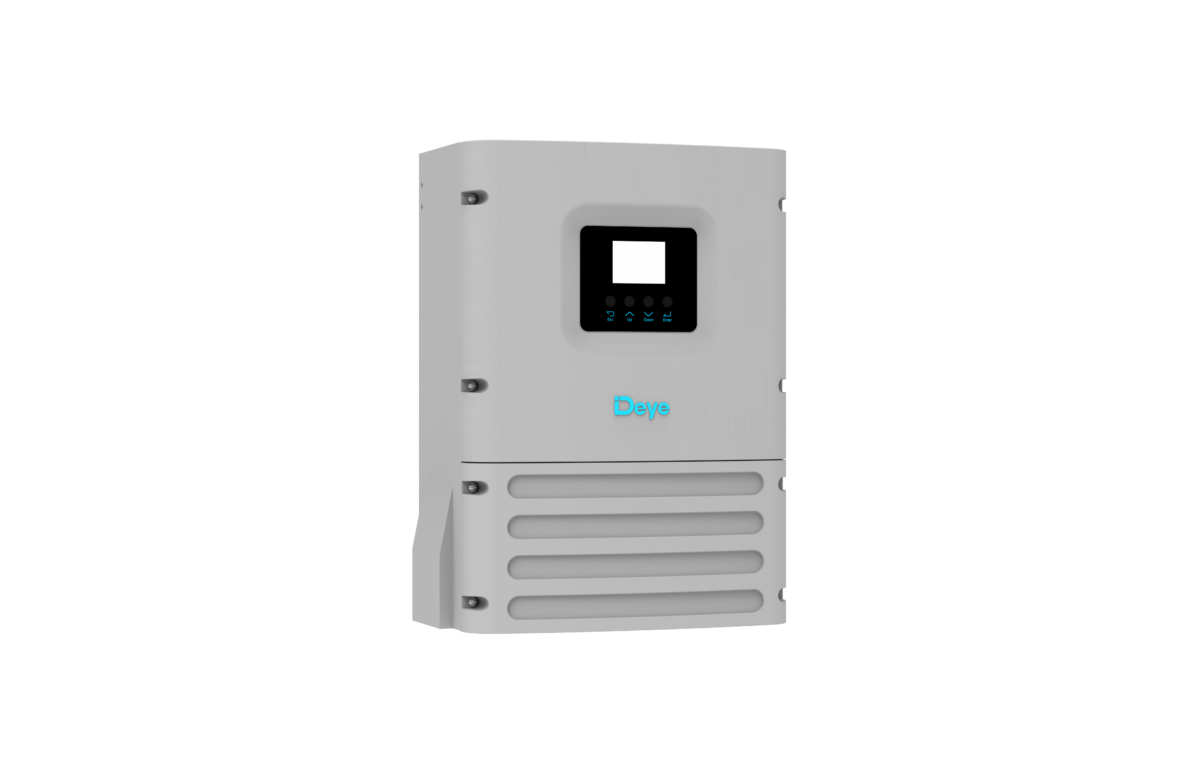





Chinese inverter manufacturer Deye has launched a new series of off-grid inverters
The OG02 series comprises four models with AC output power ratings ranging from 3.0 kW to 6.0 kW. It is an evolution of the company’s OG01 line, which was introduced last year.
According to the manufacturer, the OG02 inverters can switch from grid to battery power within 4 ms, allowing more than 99% of connected loads to remain continuously powered. The company said this fast switching time helps prevent interruptions, system restarts, and unstable motor operation that can occur with conventional off-grid inverters, which typically require 10 ms to 20 ms.
The inverters feature PV string input capacities ranging from 6 kW to 12 kW. The maximum operating input current is between 18 A and 36 A, depending on the model, while the maximum short-circuit current ranges from 27 A to 54 A.
Across all models, the MPPT voltage range is 150 V to 425 V, with a rated input voltage of 370 V.
All models measure 30.6 cm × 42.75 cm × 17.58 cm and weigh 9.3 kg. They are designed to operate at temperatures ranging from –40 C to 60 C, at altitudes of up to 3,000 m, and with a noise level below 46 dB.
The inverters have a maximum efficiency of 97.6% and a European efficiency of 96.5%, according to the manufacturer. They are supplied with a five-year factory warranty.
Deye said the OG02 series supports peak charging and discharging based on time-of-use electricity tariffs, enabling users to optimize energy consumption according to fluctuating grid prices. The system prioritizes photovoltaic generation, stores surplus energy in batteries, and discharges during peak tariff periods to reduce electricity costs and improve return on investment.
The company said the series features an IP65-rated enclosure that provides enhanced protection against dust and water compared to conventional IP20 inverters. The products are designed for operation in high-dust environments, extreme cold, and high temperatures. Deye added that the inverters use an independent cooling air duct fully isolated from the electrical system, reducing dust ingress, improving cooling stability, and helping to prevent failures caused by dust accumulation, thereby extending product lifespan.
This content is protected by copyright and may not be reused. If you want to cooperate with us and would like to reuse some of our content, please contact: editors@pv-magazine.com.

By submitting this form you agree to pv magazine using your data for the purposes of publishing your comment.
Your personal data will only be disclosed or otherwise transmitted to third parties for the purposes of spam filtering or if this is necessary for technical maintenance of the website. Any other transfer to third parties will not take place unless this is justified on the basis of applicable data protection regulations or if pv magazine is legally obliged to do so.
You may revoke this consent at any time with effect for the future, in which case your personal data will be deleted immediately. Otherwise, your data will be deleted if pv magazine has processed your request or the purpose of data storage is fulfilled.
Further information on data privacy can be found in our Data Protection Policy.