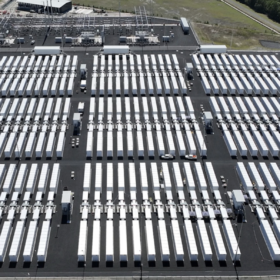
Australia becomes world’s third-largest utility battery market
Australia has overtaken the United Kingdom to rank behind China and the United States in utility-scale battery capacity, with 14 GW/37 GWh of projects at or nearing financial close.

Improving sodium-ion battery stability with calcium
Researchers in Japan have adopted a new calcium-doping strategy to improve the stability and electrochemical properties of NFM, a cathode material used in sodium-ion batteries. The new technique enhances crystallinity and increases the interlayer spacing in NFM, resulting in higher performance compared to NFM treated with conventional processes.
The Hydrogen Stream: mixed evidences from Germany’s hydrogen market
Lhyfe has opened its first hydrogen plant outside France in Germany, while the Hamburg Green Hydrogen Hub is advancing plans for a 100 MW electrolyzer at the former Moorburg coal site.
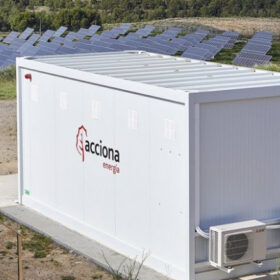
Spain updates grid rules to expand energy storage, renewables integration
Spain has overhauled its grid-access rules to support energy storage, granting hybrid renewables-plus-storage projects equal dispatch priority and full revenue rights for stored electricity.

German lab pilots 20 kV battery system to cut energy losses
Researchers at Dortmund University are testing a high-voltage battery system operating up to 20 kV to reduce energy losses and improve efficiency.
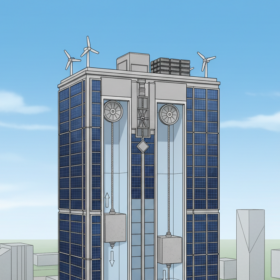
High-rise buildings could soon use gravity energy storage, say researchers
Researchers in Canada have proposed using gravity-based energy storage in high-rise buildings, in combination with photovoltaic facades, small wind turbines, and lithium-ion batteries. Their modeling indicated that this hybrid system could achieve a levelized cost of energy ranging from $0.051/kWh to $0.111/kWh.

Philippines approves world’s largest solar project for grid connection
The Energy Regulatory Commission (ERC) of the Philippines has given the MTerra Solar Project permission to develop its own dedicated transmission facilities and connect to the Luzon grid. The first phase, encompassing 2.5 GW of solar and 3.3 MWh of battery storage, is due for completion in 2026.

Negative pricing reshapes solar finance as investors turn to storage for flexibility in Europe
Growing price volatility and the rise of negative pricing across power markets are pushing lenders and developers to rethink risk and revenue structures, focusing on asset flexibility and sustainable business models for storage, including co-location.
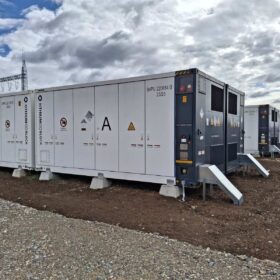
Renalfa switches on 260 MWh battery storage system in Bulgaria
The battery energy storage system is the first phase of a 315 MW/760 MWh system that is being developed alongside 238 MW of solar under Bulgaria’s largest hybrid power project to date, due for completion next year.

The Hydrogen Stream: Australia opens second Hydrogen Headstart round
The Australian government has aunched the second round of its Hydrogen Headstart program to provide revenue support for large-scale renewable hydrogen projects, while the UK government is seeking industry input on rules for hydrogen-to-power participation in its capacity market.
