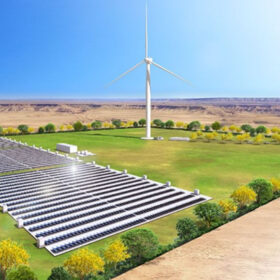
Toshiba ESS tests hybrid wind-solar project with storage in Saudi Arabia
Toshiba Energy Systems & Solutions Corp. (Toshiba ESS) has started testing batteries and energy management solutions to stabilize electricity in remote Saudi Arabia through a hybrid wind-solar pilot project. The project will run until May 2028 to evaluate power- and energy-oriented batteries and optimize battery use.
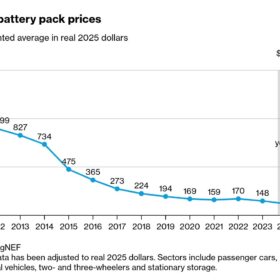
Global lithium-ion battery pack prices fall to $108/kWh, says BNEF
Battery pack prices for stationary storage fell to $70/kWh in 2025, a 45% drop from 2024, making it the cheapest lithium-ion category for the first time, according to BloombergNEF (BNEF).
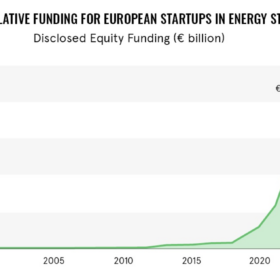
European energy storage startups raise €2.14 billion in equity funding
European energy storage hardware startups have secured €2.14 billion ($2.5 billion) in equity funding for commercial, industrial, and grid-scale applications, says Avnet Silica. Nearly half of that funding was raised in the past three years, and more than 80% in the last five.

Belize opens solar consultancy tender
The government of Belize is seeking a consultancy firm to help implement a 40 MW solar plus 20 MW/80 MWh battery energy storage project. The deadline to submit expressions of interest is Jan. 5, 2026.
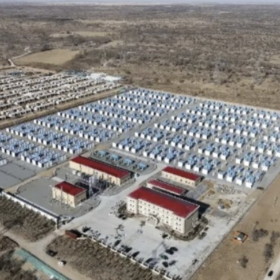
China powers up nation’s largest standalone battery storage project
A 500 MW/2,000 MWh lithium iron phosphate battery energy storage system has entered commercial operation in Tongliao, Inner Mongolia, after five months of construction, with total investment of CNY 1.5 billion ($212.2 million) and designed for peak shaving and renewable integration.

IEA sets distributed solar, storage policy path for Ukraine
A report by the International Energy Agency (IEA) recommends three strategies to accelerate the deployment of distributed solar and battery energy storage systems (BESS) in Ukraine as the country works to increase its energy security.
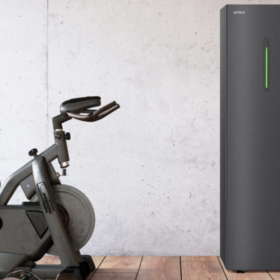
Germany’s Prolux Solutions recalls vanadium redox home battery systems
Prolux Solutions is recalling all Storac home energy storage systems in Germany and exiting vanadium redox flow technology to switch future residential products to lithium iron phosphate batteries.
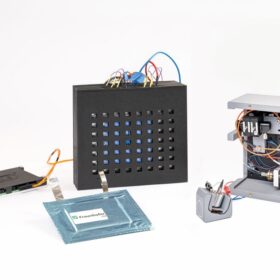
World’s first high-power aluminum-ion battery system for energy storage
For the first time, a complete aluminum-graphite-dual-ion battery system has been built and tested, showing that lithium-free, high-power batteries can deliver stability, fast response, and recyclability for next-generation grid applications.
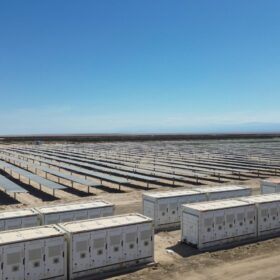
Brazil adopts legal framework for battery storage
Brazil published Law 15.296 on November 25, establishing a series of changes to laws in its electricity sector including guidelines for the regulation of storage systems, tax exemptions and the reduction of import tax rates on battery energy storage systems and its components to zero.

Keeping the smart grid cyber secure
As smart grid tech is rolled out around the world to modernize legacy assets and integrate renewable energy generation, it is also making the electricity network more prone to cyber attacks. IEC Standards provide protection but they also are challenged to keep up with the latest threats.
