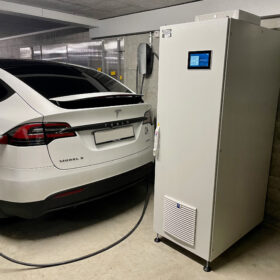
Studer unveils 3-phase distribution cabinet for solar-plus-storage
Switzerland-based Studer says its new infra product can include up to 24 kW of solar and 30 kWh of battery storage. The system has two 12 kW inputs for solar panels and uses 5 kWh batteries from Italian manufacturer Weco.
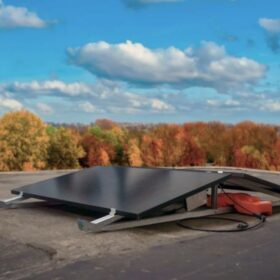
Dutch startup unveils 600 W two-module residential rooftop PV system
Netherlands-based developer of lightweight PV systems, Rable Group, claims its new rooftop PV solution can be installed in 20 minutes without the need for special permitting or modifications to the fuse box.
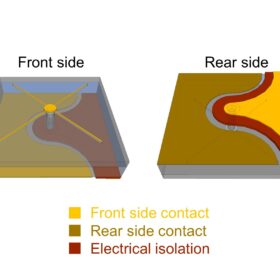
First attempt to build back-contact micrometric III-V photovoltaic cells
An international research group has utilized through-substrate-vias to create 3D interconnections in III-V solar cells with a triple-junction architecture. The novel cell design was found to have a low shading factor of below 3% and a 6-fold increase in wafer area use compared to cells based on 2D interconnects.
AmpIn Energy to build 1.3 GW solar cell, module factory in India
AmpIn Energy Transition says it plans to invest $372 million to set up more than 600 MW of renewable energy projects and an integrated 1.3 GW solar cell and module factory in eastern India.
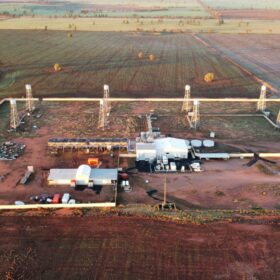
Australian startup begins work on agrivoltaic project with thermal storage
Graphite Energy, a thermal storage company, is building a facility in Australia to demonstrate how renewable energy and agriculture can co-exist through agrivoltaic and greenhouse systems.

Chinese PV Industry Brief: Polysilicon prices continue to slide
Polysilicon prices fell by as much as 3.23% in China this week, according to the China Nonferrous Metals Industry Association (CNMIA).

U.S. solar has less thanks to give, as El Niño pattern develops
In a new weekly update for pv magazine, Solcast, a DNV company, reports that, in November, weather patterns have started to resemble the characteristic El Niño signature, with low pressure in the northwest Pacific, and an enhanced subtropical jet stream spreading from the Pacific across the southern United States.
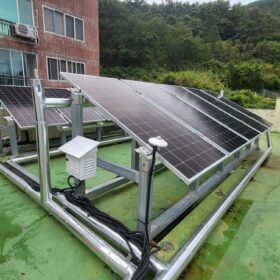
Retrofit solution to convert rooftop PV systems into photovoltaic-thermal arrays
Scientists in Korea have proposed a simple methodolgy to tranform existing PV systems into photovoltaic-thermal (PVT) arrays. They claim the new design offers a cheaper alternative to expensive PVT systems, while enabling easier and faster deployment.
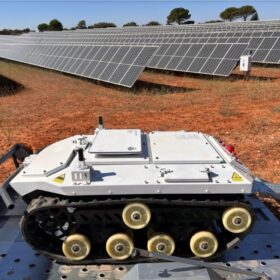
New robots for PV plant inspections
The Antecursor II robot autonomously inspects upper and lower solar panel structures for thermal anomalies, with more than 30 hours of autonomy.
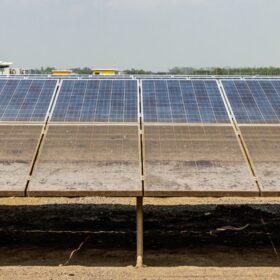
Solutions needed to future-proof big solar amid weather-related risks
Extreme weather is a growing risk to solar farms. Future-proofing through advanced technologies, leveraging data from novel sources, and accepting risk is vital, but rarely achieved today for a number of reasons. Insurers, lenders, developers, contractors and manufacturers recently came together in Melbourne, Australia, to discuss solutions to the intractable problem of weather risk.
