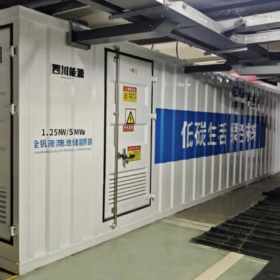
China commissions first urban underground vanadium flow battery system
China has deployed its first 1.25 MW urban vanadium flow battery (VFB), supporting peak AC loads and offering a safer alternative amid tighter lithium-ion storage regulations in dense urban environments.
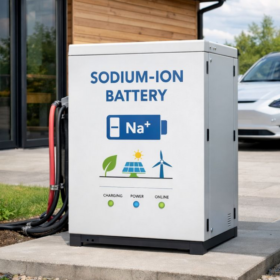
NanoMalaysia unveils sodium-ion prototype surpassing 300 Wh/kg
The new prototype ranks among the most advanced sodium‑ion battery systems reported worldwide.
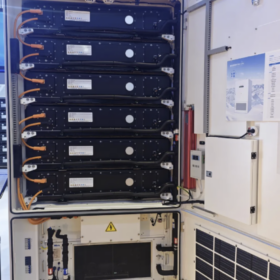
Hizenergy launches four-product C&I storage lineup with 300 kW PCS
Hizenergy has introduced a four-product commercial-and-industrial (C&I) energy storage lineup, including a 300 kW low-voltage PCS designed for direct connection to 400 V commercial distribution networks.

Volkswagen launches first large-scale battery storage project in Germany
Volkswagen has connected its first 20 MW/40 MWh stationary storage system in Salzgitter, Germany, marking the start of its plan to integrate battery production, storage, and energy trading within a single corporate structure.
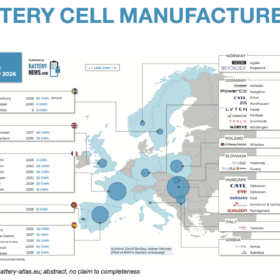
‘Battery Atlas 2026’ maps Europe’s cell, pack and battery manufacturers
The “Battery Atlas 2026” report shows consolidation in Europe’s battery market. More than 2,000 GWh of cell production capacity was announced in 2023, but the realistic forecast for early 2026 is around 1,190 GWh, including approximately 673 GWh led by Asian companies.

Thermocold debuts air-to-water heat pump for commercial buildings
The new product line covers 124–644 kW in heating and 128–632 kW in cooling, operates down to -15 C, and supports various configurations with R454B or R410a refrigerants.
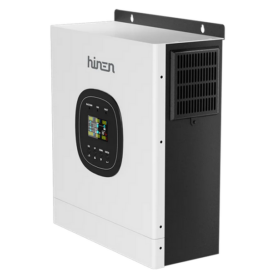
Hinen releases residential off-grid inverter
The 3 kW N3300S inverter combines a pure sine wave inverter with an integrated MPPT solar charge controller for small residential and hybrid PV systems. The unit supports multiple power sources, flexible battery chemistries, and rapid grid/off-grid switching.
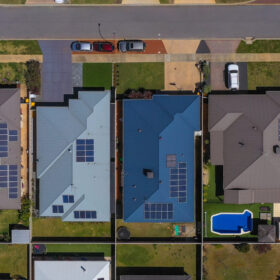
Rooftop solar rebounds in Australia, home battery demand surges
Australia’s rooftop solar market has bounced back into record-setting territory with 281 MW of new capacity registered across the country last month, marking the largest February total on record.
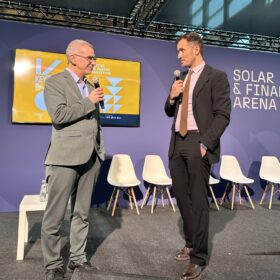
Key takeaways from Italy’s Key Energy trade show
Key – The Energy Transition Expo was held last week in Italy, featuring 1,065 exhibitors and 530 buyers. The event focused on energy-as-a-service and agrivoltaic projects, with operators saying agriPV standardization should be reached by 2030-32. Italian Energy Minister Gilberto Pichetto Fratin told pv magazine that coal and gas are strategic assets, noted that the “PV sector is maturing,” and urged the European Union to coordinate on gas storage and supply chains for modules and storage solutions.
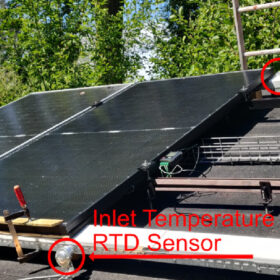
Air-based photovoltaic-thermal system can achieve significant energy savings in buildings
Researchers in Sweden have developed an air-based photovoltaic-thermal system that can preheat ventilation air and domestic hot water, cutting district heating demand by up to 16% for ventilation and 7% for hot water while also reducing peak heating loads in cold Nordic climates.
