
Sungrow brings grid-forming PowerTitan 3.0 storage system to Europe
Sungrow is introducing its large-scale energy storage system, PowerTitan 3.0, to Europe, featuring grid-forming capability, next-generation battery cells, DC coupling for co-located solar projects, and streamlined commissioning to accelerate deployment.
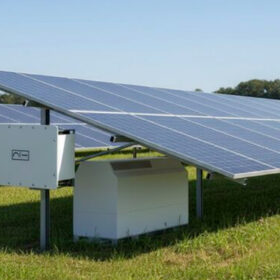
Moonwatt brings DC-coupled, passively cooled sodium-ion tech to solar projects
The Dutch start-up, founded by former Tesla leaders, is taking a novel approach to sodium-ion battery technology, optimizing it for integration with solar power plants. Its technology is set to be deployed for the first time in a Dutch solar-plus-storage project later this year.

Envision claims AI-enabled storage systems can detect battery safety risks days in advance
Envision Energy has launched a fully integrated energy storage solution combining hardware, software, and market-facing AI to optimize performance, safety, and trading. Its “Physical AI” platform embeds intelligence across cells, systems, and operations, enabling predictive maintenance and real-time market participation.

EU installs 27.1 GWh of battery storage in 2025 as utility scale leads
The European Union added 27.1 GWh of battery energy storage capacity in 2025, with utility-scale systems accounting for the majority of new installations as residential storage declined amid lower electricity prices and reduced support schemes, according to a new report from SolarPower Europe.
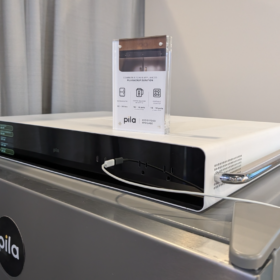
Pila Energy emerges to offer residential batteries, but sexy
Pila Energy is offering a slim, sleek home battery that doesn’t need approvals or permits and works in coordination. What’s the catch?
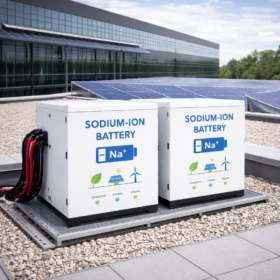
Sodium-ion batteries now competitive in niche markets
Sodium‑ion batteries are emerging as a safer, lower-cost alternative to lithium‑ion, with a recent international study highlighting their competitiveness in stationary energy storage. The research shows that ongoing investment and supply-chain development could enable broader adoption within the next decade.

New Jersey governor orders major solar, storage expansion on first day
Mikie Sherrill, governor of the US state of New Jersey, has signed two executive orders directing state regulators to accelerate utility-scale solar, expand community solar to 3 GW and advance up to 750 MW of battery energy storage as part of an effort to contain rising electricity prices and address projected capacity shortfalls.

RheEnergise commissions first ‘high density hydro’ long-duration storage in UK
Pilot long-duration energy storage (LDES) project uses low viscosity, denser-than-water fluid. RheEnergise is panning for future projects in 10 MW to 100 MW range, with six to 20 hours of storage capacity.

Five trends for energy storage as global market passes 100 GW
A new report from Wood Mackenzie identifies five key trends that will define the energy storage industry in 2026, including supply chain restructuring and the rise of non-lithium batteries.
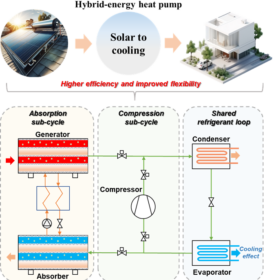
Scientists unveil hybrid-energy heat pump combining absorption and compression cycles
Researchers in Hong Kong have developed a hybrid-energy heat pump that seamlessly combines absorption and compression cycles using crystallization-free ionic liquids, improving efficiency and reliability across varying solar conditions. Simulations in multiple Chinese cities show the system can significantly cut electricity use and cooling costs, making it promising for sustainable building cooling and future commercial scaling.
