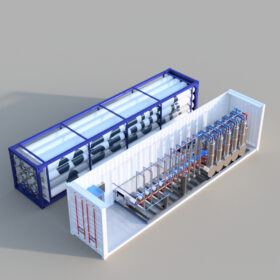
Compressed air energy storage system for homes, businesses
Segula Technologies has launched its Remora Stack product, a containerized isothermal air compression storage solution the company claims is 70% efficient.
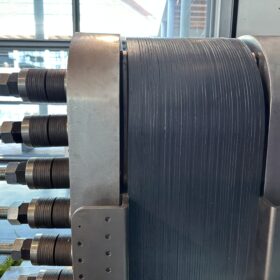
Exploring hydrogen for energy development in remote communities: Comparing Canadian and Malaysian prospects
Researchers at the University of Waterloo in Canada investigated hydrogen as a potential decarbonization strategy for remote communities in Canada and Malaysia. They reviewed the two countries’ respective situations before presenting a value proposition for continued work – both separately and collaboratively.
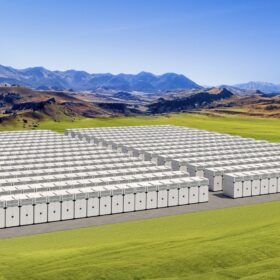
US energy storage installations grow 33% year-over-year
Storage deployment in the United States grew across all segments and is forecast to grow another 25% in 2025, according to Wood Mackenzie.

Vaillant, Fraunhofer ISE present residential heat pump with new safety concept
The novel heat pump system relies on a thermal sensor based on an adsorbent-coated sensor layout developed by Vaillant in cooperation with the Fraunhofer Institute for Solar Energy Systems (Fraunhofer ISE). This technology is reportedly effective in preventing propane from forming an ignitable mixture with air outside the device.
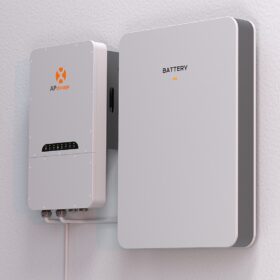
Home batteries vs. power generators
Assessing the difference in cost, functionality and operations of fueled generators versus home batteries.

Triple Solar unveils PVT-assisted heat pump using waste heat from PV
Triple Solar BV has developed a residential photovoltaic-thermal (PVT) heat pump that uses waste heat from PV modules, eliminating the need for an outdoor unit.
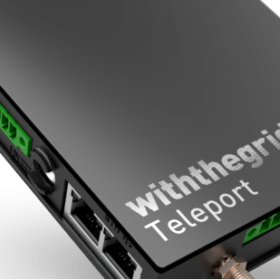
Withthegrid expands real-time renewable energy asset controlling platform
Dutch technology company Withthegrid has expanded the functionality of its flagship Teleport Gateway, supporting real-time control and management for a wider range of renewable energy assets and markets. To enable product and international expansion, it has raised €3.5 million.
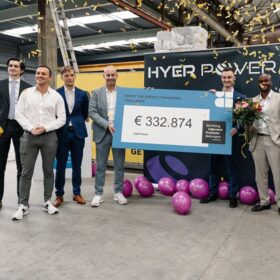
Dutch startup developing large plant to generate heat, power from hydrogen
HyER Power, a Dutch hydrogen energy producer, is developing the first large-scale hydrogen power plant in the Netherlands capable of generating both electricity and heat. The plant is set to begin operations by the end of the year.
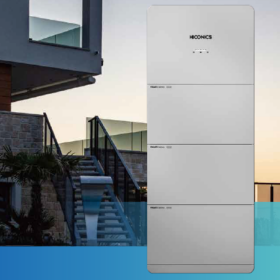
Midea Hiconics presents new three-phase residential storage systems
The company said its new Hienergy Series G2 product has a PV input ranging from 10 kW to 30 kW and storage capacity spanning from 5 kWh to 20 kWh. Maximum efficiency is rated at 97.5%.
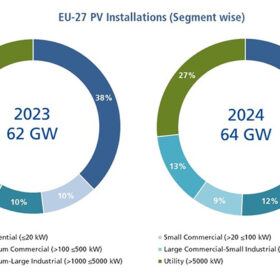
Are stakeholders ready for the segmental shift transpiring in the European PV and battery storage markets?
Many top European markets known for their dominant residential segments are prioritizing larger-scale projects, particularly in the commercial & industrial (C&I) and utility-scale segments. As this segmental shift gains momentum, the scale of investment and the complexity of maintaining projects in the new segment demand specific risk mitigation strategies. Consequently, investors, developers, EPCs, and—most importantly—C&I and utility-scale customers must reassess the criteria they use to select the most valuable and sustainable brands.
