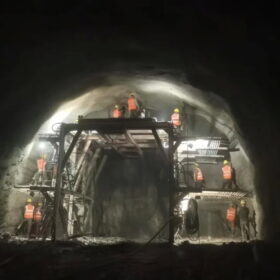
Chinese consortium building 1.2 GWh compressed air energy storage project
A state-backed consortium is constructing China’s first large-scale compressed air energy storage (CAES) project using a fully artificial underground cavern, marking a major step in the technology’s commercialization.

The Hydrogen Stream: China not to dominate the electrolyzer supply chains, says Oies
The Oxford Institute for Energy Studies (OIES) says China’s efforts to cut electrolyzer costs could follow its success in solar, but will not guarantee dominance in global supply chains.
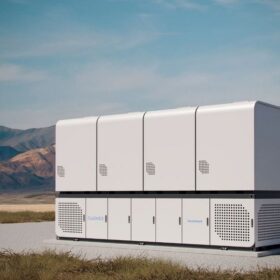
Fluence launches highly-modular 7.5 MWh AC-based BESS platform
The system features an innovative split design breaking away from the industry standard 20-foot container. It is configurable for storage durations of two to eight hours.
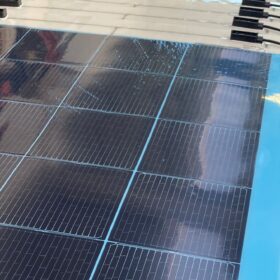
Reducing fuel consumption in shipping with wind-solar retrofits
A European consortium is applying wind-solar hybrid and tilting wing technology as modular refits of in-service long-distance cargo vessels in an effort to reduce fuel consumption.
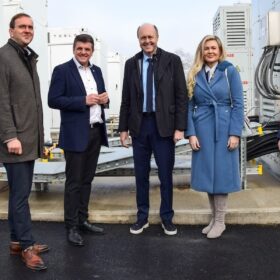
Austria’s largest battery goes online
The storage facility featuring six Megapack 2XL systems from Tesla was built over a seven-month period in the vicinity of a wood gas generator and a solar farm. The project has a power output of 12 MW and storage capacity of 24 MWh.
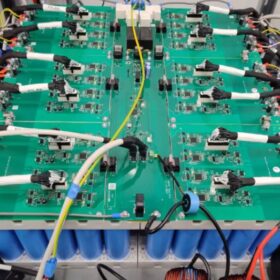
HTW Berlin 2025 energy storage inspection: Kostal, SAX Power set new efficiency records
The evaluation confirmed the outstanding system efficiency of European inverter manufacturers, in particular. It also found large differences in efficiency of certain hybrid inverters from the maximum efficiency specifications provided by the manufacturers on the data sheets.
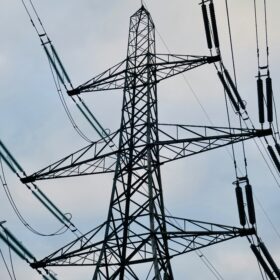
Large batteries with grid-forming inverters can increase renewables hosting capacity
Researchers recommended that transmission system operators consider adopting grid-forming battery energy storage systems system-wide to improve grid stability and to maximize system hosting capacity for solar and wind generation.
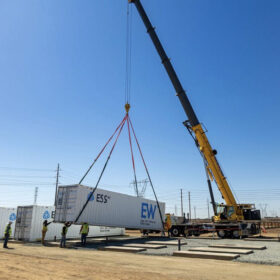
Go with the flow (batteries)
There is a gap in the market for long-duration energy storage (LDES), according to US-based manufacturer ESS Inc. – one which can’t be plugged with lithium-ion chemistry. Hugh McDermott, of ESS Inc. tells pv magazine how he thinks iron flow batteries fit into the energy system of the future, as the company pursues global expansion.
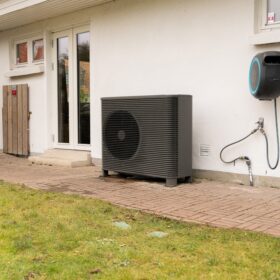
A closer look at Aira’s heat pump tech
Swedish manufacturer Aira launched its heat pump in Europe in 2024. The company told pv magazine it is now developing a full home energy management system proposition to integrate heating, solar, battery energy storage and electric vehicle charging.
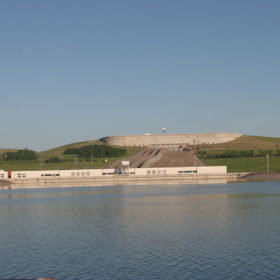
Philippines’ green energy auction heavily oversubscribed with nearly 7 GW of pumped hydro bids
The country’s Green Energy Auction (GEA-3) attracted a cumulative 7.5 GW of projects, far surpassing the 4.65 GW installation target.
