
Germany records 453 hours of year-to-date negative electricity prices
Germany has logged 453 hours of negative day-ahead power prices this year, already above the total in 2024, while hours above €100 ($116.,54)/MWh have also surpassed last year.

Brazil bets big on batteries
Energy storage in Brazil is entering a period of accelerated growth. Despite the absence of a legal framework, companies are expanding battery production, diversifying models, and preparing storage to play a central role in the energy transition.

Tigo, EG4 to jointly make solar gear at US factory
California and Texas companies will produce Tigo Energy’s optimized inverters and module-level power electronics (MLPE) together with EG4 inverters.

Argentina’s oversubscribed BESS tender draws record-low bids
The Argentine Energy Secretariat has received significantly more bids than expected for its public call to install large-scale battery energy storage systems (BESS) in the Buenos Aires metropolitan area (AMBA). Although the tender aimed for 500 MW, the AlmaGBA procurement drew proposals totaling 1,347 MW on the back of highly competitive pricing and strong industry interest.
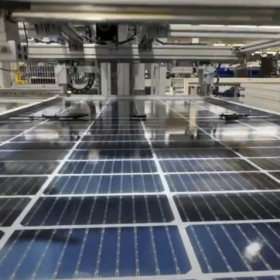
Bila Solar introduces 550 W solar panel with US-made steel frame
Bila Solar has introduced a 550 W solar module with a US-made steel frame through a partnership with Origami Solar, with the panels also using U.S.-made solar cells.
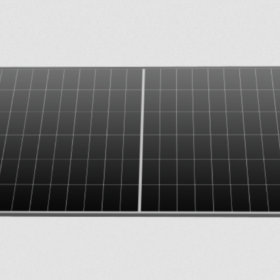
Longi unveils lightweight module for low-load rooftops
Chinese PV manufacturer Longi has launched a lightweight back-contact solar module for low-load commercial and industrial rooftops with limited structural load capacity.
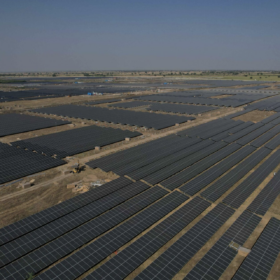
NTPC REL opens bidding for 300 MW solar project in India
NTPC Renewable Energy Ltd. (NTPC REL) has started accepting bids for an engineering, procurement, and construction (EPC) package, including land acquisition, to develop a 300 MW grid-connected PV project near the NTPC Anta gas-fired power station in northwestern India.
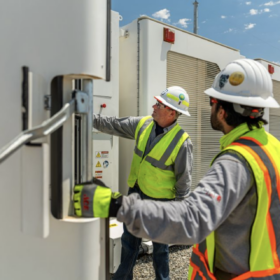
Fluence expands US battery production with new Texas fab
Fluence says its new Houston fab brings the number of its US production sites to five and has helped employ more than 1,200 manufacturing workers this year.
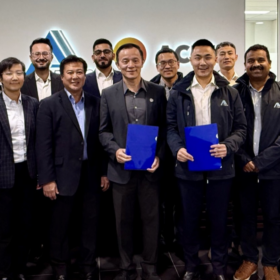
ACEnergy signs 3 GWh battery supply deal with CATL
Australian renewable energy developer ACEnergy has tapped China’s Contemporary Amperex Technology Co. Ltd. (CATL) to supply 3 GWh of battery energy storage systems (BESS) in Australia.
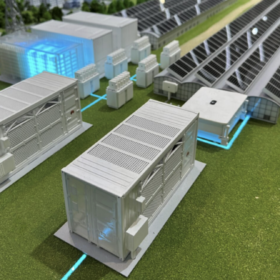
New digital twin technology boosts performance management for BESS
The new digital twin from Brussels-based 3E, developed with the Free University of Brussels (VUB) under the Belgian government-funded FULLEST project, exposes a key oversight in Europe’s utility-scale battery storage management. While 80% of operators rely solely on battery management systems (BMS), 3E identified a 4% gap between reported and actual battery health – enough to affect operations and revenue.
