
GCL Optoelectronic targets 2026 IPO, US plant, space solar rollout
GCL Technology says its GCL Optoelectronic subsidiary plans a Hong Kong initial public offering (IPO) in 2026, alongside a potential 500 MW factory in the United States and a roadmap for space-based solar.
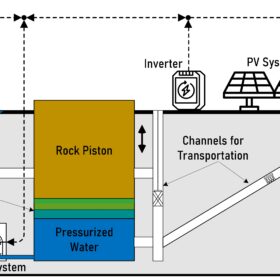
PV-driven hydraulic hydro storage may hit $0.022/kWh LCOE in the U.S.
An international study has demonstrated that utility-scale solar PV paired with hydraulic hydro storage (HHS) could reach an LCOE as low as $0.022/kWh in select U.S. regions. The system could provide GWh-scale, cost-competitive, and highly reliable long-duration storage, capable of powering large commercial districts with minimal environmental impact.
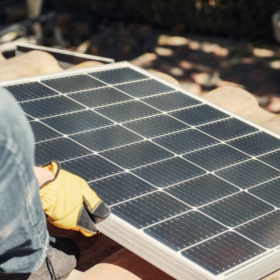
Colorado House passes legislation to legalize plug-in solar for renters
The Colorado House of Representatives has passed a bill to legalize plug-in solar systems for renters and multifamily residents, establishing a regulatory framework for portable arrays that connect directly to standard home outlets.
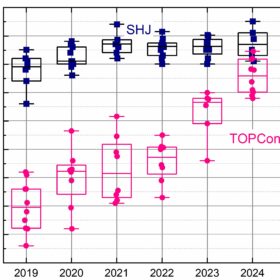
Heterojunction vs. TOPCon in perovskite-silicon tandem
Scientists in Australia claim that TOPCon cells are rapidly closing the open-circuit voltage gap with heterojunction counterparts, now under 10 mV, while offering greater wafer tolerance and high industrial scalability. Despite slightly lower efficiency, TOPCon-based perovskite/silicon tandems can achieve a levelized cost of energy comparable to heterojunction-based tandems due to reduced fabrication costs, according to the researchers.

South Australia opens up new areas for renewable energy opportunities
South Australia has opened up more than 11,000 square km of land for the potential development of renewable energy projects as it continues the march to its target of 100% net renewables by 2027.
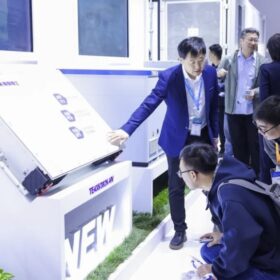
TBEA unveils grid-forming converter for large-scale storage, renewables
Chinese power transformer manufacturer TBEA introduced a grid-forming string power conversion system (PCS) for utility-scale storage, renewable energy base projects, and weak-grid applications. The TE435/392K-HV-BL high-power converter focuses on improving power density and grid support. According to TBEA, its fully integrated liquid-cooling design increases volumetric power density by 78% and gravimetric power density by 32% […]
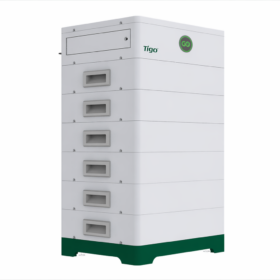
Tigo releases modular battery for residential PV
The US manufacturer has launched a modular residential battery for Europe, scalable from 7.3 kWh to 47.9 kWh with LFP chemistry and IP65 protection. The system offers up to 23.3 kW nominal power, over 6,000 cycles, and a depth of discharge of 90%.
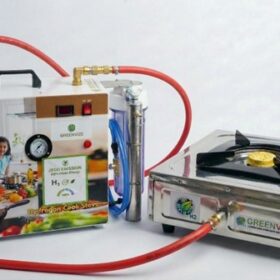
Indian startup launches plug-and-play hydrogen cooking unit
Indian clean-tech startup Greenvize has launched a compact hydrogen-based cooking system designed for residential and commercial kitchens. The system integrates a proton exchange membrane (PEM) electrolyser directly into a cooking unit, enabling on-site hydrogen generation from water without the need for storage or distribution infrastructure.

Maxeon files for restructuring in Singapore
Company statements in a filing with the U.S. Securities and Exchange Commission indicate it will seek an arrangement between itself and creditors that may allow it to survive “as a going concern.”
Solar, mining groups partner to improve mineral traceability
The Solar Stewardship Initiative (SSI) and the Initiative for Responsible Mining Assurance (IRMA) have signed an agreement to strengthen traceability and sustainability standards across solar supply chains.
