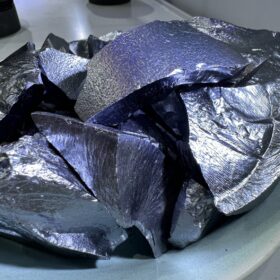
Chinese PV Industry Brief: Polysilicon prices edge higher, wafers flat
The upward trend of polysilicon prices continued this week, although by only 0.42%, with polysilicon producers keeping utilization rates between 46% and 80%, according to the CNMIA.
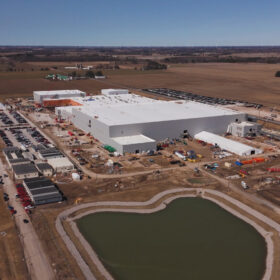
Corning, T1 Energy agree to U.S. domestic solar polysilicon, wafer supply deal
The partnership supports a full domestic energy supply chain from raw polysilicon to finished solar panels.

Germany deploys 1.4 GW of solar in July
Germany added 8.65 GW of new photovoltaic capacity in the first seven months of this year, according to the Federal Network Agency (Bundesnetzagentur), bringing cumulative solar deployments to more than 109 GW.
PGE Group launches 400 MW two-hour battery storage tender in Poland
PGE Group has launched a tender for a 400 MW/2-hour battery energy storage system in Gryfino, Poland, expanding the state-owned company’s national storage capacity to 800 MWh.

Activ8 Energies acquires Low Carbon Energy to expand UK solar portfolio
Activ8 Energies, 50% owned by SSE Airtricity, has acquired all shares of UK-based Low Carbon Energy (LCE) to strengthen its commercial and industrial (C&I) solar portfolio in the United Kingdom.

The urgent call to transform leadership in the face of solar slowdown
This week, WiSEu Network – Women in Solar+ Europe reflects on SolarPower Europe’s forecast of a 1.4% drop in EU solar growth for 2025, the first decline since 2015, and why this signals more than just a market slowdown. To meet 2030 targets, we don’t just need better strategies; we need a transformation in leadership itself. That means dismantling centuries-old biases that equate leadership with dominance and detachment, and embracing a fuller spectrum of qualities: empathy, collaboration, and emotional intelligence, now recognised as essential for navigating complexity and driving the energy transition.
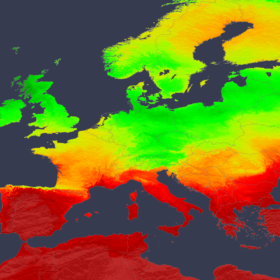
Record-warm July boosts solar in North, dampens South and East
In a new weekly update for pv magazine, Solcast, a DNV company, reports that persistent high‑pressure over Scandinavia delivered significantly elevated irradiance up to 30 % above normalin July, while central and eastern Europe faced reduced solar generation under increased cloud cover and rainfall.
Jakson Green secures 85,000 MT green ammonia at record-low INR 50.75/kg
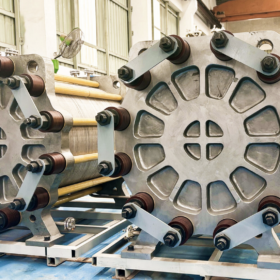
Jakson Green secured 85,000 metric tons (MT) per year in Solar Energy Corp. of India’s (SECI) sixth green ammonia auction at a record-low INR 50.75 ($0.58)/kg, marking the lowest bid to date.

Dutch heating specialist offers residential heat pump for flat roofs
WeHeat said its monoblock air-to-water heat pump features a seasonal coefficient of performance of 4.7 and propane as the refrigerant. The system is available in four versions with output ranging from 8 kW to 11 kW.

Researchers secure tech to recover silver from retired solar panels
Macquarie University researchers have developed a process to extract silver from retired solar panels. They are working with Lithium Universe to reuse the metal in electronics and solar manufacturing.
