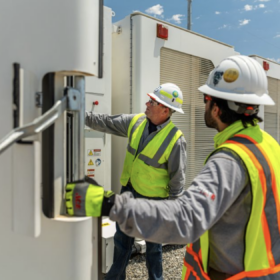
Fluence launches 35 GWh battery factory in Vietnam
Fluence is significantly expanding its manufacturing footprint in Vietnam, following delays in scaling its new production facilities in the United States.

Trump opposes solar and wind, but US renewables lead new-build capacity
US President Donald Trump took to social media this week to voice opposition to solar and wind energy. The president has taken steps to slow renewable energy growth in the United States, but it is still expected to remain the dominant source of new-build electric generation capacity.

Photovoltaics for mango drying
Scientists have created a solar cabinet dryer for mango slices, with PV-powered forced convection. Placing mango slices of different thicknesses inside, they have measured the operation of their device against two reference methods and have found that thermal efficiency reached 30%.
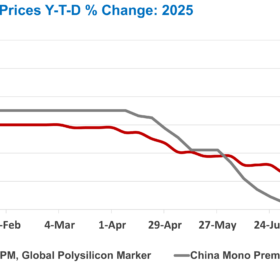
Chinese polysilicon prices stabilize after five-week 31% rally
In a new weekly update for pv magazine, OPIS, a Dow Jones company, provides a quick look at the main price trends in the global PV industry.
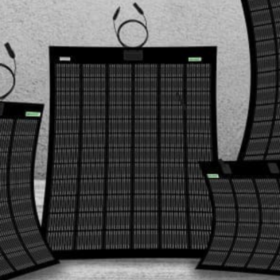
Waaree Energies introduces flexible lightweight solar modules
Waaree Energies has launched flexible solar modules up to 70% lighter and under 3.5 mm thick. The panels can be bonded directly to surfaces without mounting penetrations, suitable for sites where drilling or heavy support structures are impractical.
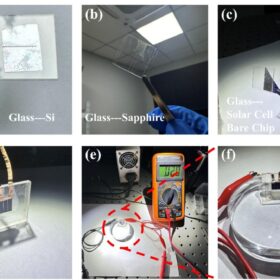
Packaging solar cells via glass-glass welding
A Chinese-Japanese research team has developed a new laser technology for the micro-welding of transparent and hard materials for solar cell packaging. The process is based on a silver ion solution that can reportedly achieve high-quality connections.
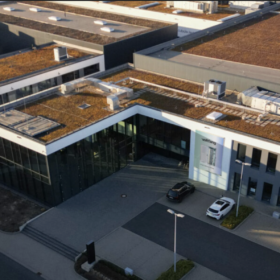
Voltfang opens second-life battery plant in Germany, billed as Europe’s largest
Voltfang has opened what it claims is Europe’s largest second-life battery storage plant in western Germany, with 250 MWh of annual capacity expected in 2026 and a target of 1 GWh before 2031.
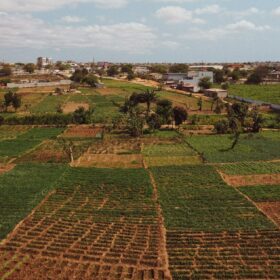
Researchers use solar to turn human waste into fertilizer
Stanford University researchers have built a photovoltaic-thermal electrochemical stripping system that extracts fertilizer nutrients from human urine. They say the system could provide a cost-effective alternative in regions with limited access to conventional fertilizers.

Serbia reaches 281 MW of solar capacity
Serbia’s solar market topped 5,000 prosumers in the first half of 2025, though no plants above 10 MW are online. The country has a gigawatt-scale pipeline and procured 124.8 MW in its February renewables auction.
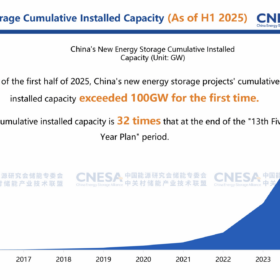
China new energy storage tops 100 GW as lithium overtakes pumped hydro
China’s new energy storage capacity exceeded 100 GW by June 2025, with total installations reaching 164.3 GW, surpassing pumped hydro additions amid accelerating deployments and changing market dynamics, according to the China Energy Storage Alliance (CNESA).
