
Malaysia reaches 350 MW residential solar quota for net metering
Malaysia’s Sustainable Energy Development Authority reports that the 350 MW capacity allocated for residential solar under the net metering initiative has been reached. However, capacity remains available for government buildings, as well as commercial and industrial users under the same scheme.

Bahrain’s Khalifa Bin Salman Port to host 11.4 MW solar plant
India’s Bhageria Industries plans to build a utility-scale PV facility at the Khalifa Bin Salman Port of northeastern Bahrain. The project marks Bhageria’s first international solar venture.
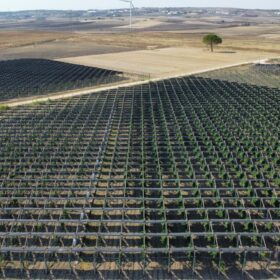
Agrivoltaics postpone harvest, improve wine quality
Italian winemaker Svolta Srl has deployed an agrivoltaic facility at its vineyard in Apulia, Italy. The PV array allowed the cultivation of vines that are normally not viable at this latitude.

Germany’s new solar installations hit 790 MW in August
Germany’s new solar installations surged to 790 MW in August, contributing to 10.23 GW of newly installed PV capacity for the first eight months of this year.
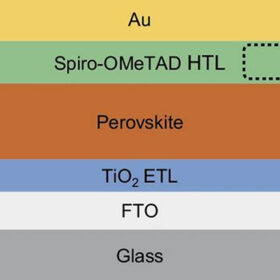
Perovskite solar cell based on lithium salt-doped spiro-OMeTAD achieves 25.45% efficiency
Researchers in China have proposed a new lithium-free doping strategy to fabricate spiro-OMeTAD-based hole transport layers (HTLs) for applications in perovskite solar cell. A PV device built with a salt-doped HTL achieved a record-breaking efficiency of 25.45%.

INA Solar breaks ground on 3 GW solar panel factory in India
Insolation Energy (INA Solar) is building a 3 GW PV module factory and aluminum frame plant in Rajasthan, India.

Engie secures 10-year virtual PPA from Coca-Cola in Australia
Coca-Cola has signed a virtual power purchase agreement (PPA) brokered by France-based Engie, to source renewable energy and associated credits from the Wellington North Solar Farm in the Australian state of New South Wales.

France’s Carbon reveals plans to acquire Photowatt
Carbon, a French PV module maker, has revealed plans to acquire panel manufacturer Photowatt, which is a unit of French energy giant EDF.

DYCM Power announces $800 million US solar cell, module factory
DYCM Power says it will build an $800 million solar cell and module factory in the United States, starting with 2 GW capacity and plans to expand to 6 GW.
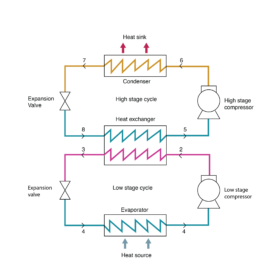
How to increase coefficient of performance in two-stage cascade heat pumps
A group of researchers in Thailand outlined a new methodology to identify the optimal temperature in two-stage cascade heat pumps using non-azeotropic refrigerants. Through their analysis, the scientists found that the coefficient of performance for simultaneous heating and cooling is affected by the pinch point temperature at the cascade heat exchanger, with lower temperature levels being responsible for a higher COP.
