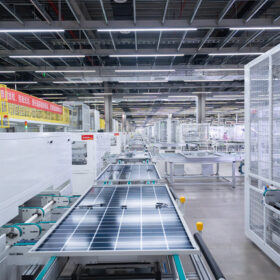
Chinese PV Industry Brief: Tongwei starts due diligence on bid for Runergy
Tongwei has initiated due diligence on its CNY 5 billion ($691.8 million) bid to acquire Chinese solar maker Runergy, aiming to secure at least 51% of its equity. The deal, which would be the largest in the PV sector this year, remains subject to changes or potential termination.

CHN Energy starts connecting 1 GW of offshore solar in China
CHN Energy has connected the first phase of its 1 GW offshore solar project in China to the grid, marking progress on what it calls the world’s largest open-sea solar array, capable of powering 2.67 million urban residents upon completion.

Understanding renewable energy ‘drought’ at solar, wind sites
An international research team based across Canada, China and the US have said developers must stop focusing not only resource availability, and also consider resource variability and resource extremeness, to avoid renewables “drought” at solar and wind sites.

Learning from leading rooftop solar markets
A report from the Council of Energy, Environment and Water has analyzed nine of the ten countries with the largest rooftop solar markets to offer recommendations to other economies looking to accelerate rooftop solar deployment.
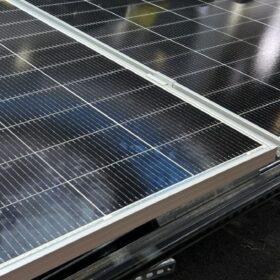
Premier Energies to enter aluminum frame manufacturing
Premier Energies, a solar cell and module manufacturer in India, will set up an aluminum frame factory with an annual capacity of 36,000 metric tons for captive consumption.
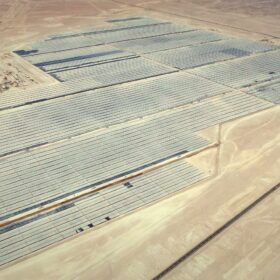
PowerChina launches 52 GW solar module, inverter tender
PowerChina has launched a 52 GW procurement plan for 2025, which includes solar modules, inverters, and 16 GWh of energy storage systems.
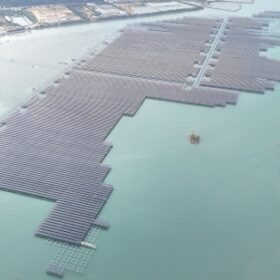
‘Typhoon-resistant’ offshore PV project nears completion in China
China Three Gorges Corp. has nearly completed a 180 MW offshore solar plant, designed for typhoon resistance, off the coast of China.
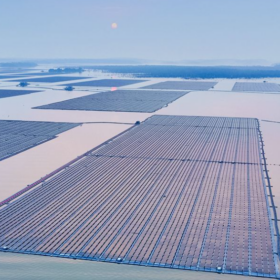
Tata Power unit commissions 126 MW of floating solar in India
Tata Power Renewable Energy has completed a 126 MW floating PV array in Omkareshwar, India. The installation features 213,460 bifacial glass-to-glass modules.
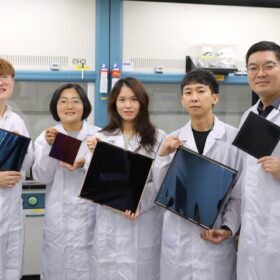
KRICT sets world record with 20.6% efficiency for large-area perovskite cells
The Korea Research Institute of Chemical Technology (KRICT) has set a world record for power conversion efficiency at 20.6% for large-area perovskite solar cells exceeding 200 cm². The result, confirmed by Germany’s Fraunhofer Institute for Solar Energy Systems ISE (Fraunhofer ISE), marks a significant milestone in solar cell technology.
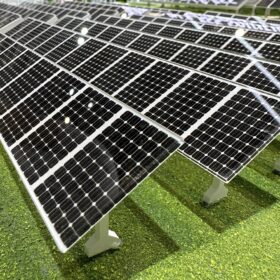
Digital twin for autonomous aerial monitoring of PV power plants
An international research team has created a digital twin that purportedly enables analysis of different scenarios on PV plants’ aerial monitoring. The new tool is claimed to reduce the risk associated with real-world experimentation and help identify the most effective strategies to improve PV system monitoring.
