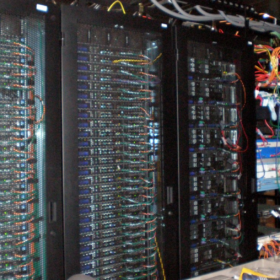
Deloitte urges India to align renewables with AI data growth
India can leverage its expanding renewable energy base to power AI-driven data center growth, but grid readiness, transmission upgrades and coordinated policy reform will be critical, according to a Deloitte Asia Pacific report.
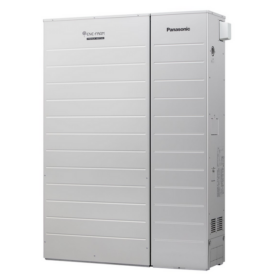
Panasonic debuts fuel cell cogeneration system for PV‑integrated homes
Panasonic has launched a new home fuel cell system for detached houses, designed to boost solar self-consumption through HEMS‑based smart scheduling. The unit generates electricity and heat from gas, supports demand response, and can supply emergency power during outages.
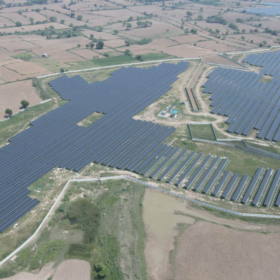
India adds 7.8 GW of open-access solar in 2025
India installed 7.8 GW of open-access (off-site C&I) solar in 2025, pushing cumulative capacity past 30 GW by year-end, according to Mercom India.
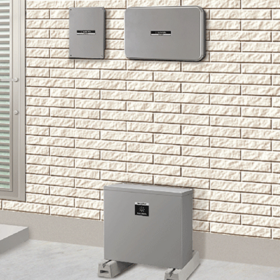
Japanese utility launches residential battery demand response pilot
Kyushu Electric Power Co. will begin a demonstration project on March 1 using remotely controlled home batteries supplied by Sharp Energy Solutions to ease solar curtailment in southern Japan.
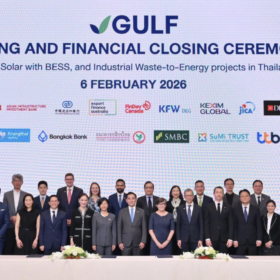
ADB backs $350 million for three solar-plus-storage projects in Thailand
The Asian Development Bank (ADB) has approved a $350 million loan to Gulf Renewable Energy to build 194 MW of solar capacity, including two battery-integrated projects, in central Thailand.
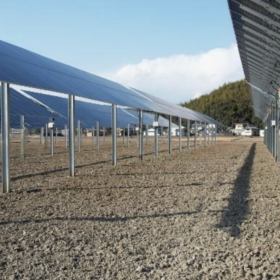
Idemitsu switches on 2 MW of solar above rice paddy
Japanese petroleum company Idemitsu Kosan has announced its 2 MW agricultural solar power plant, installed 3.8 meters above a rice paddy, has begun operating. The project features a community-based model that returns a portion of the profits from power generation to the farmers.
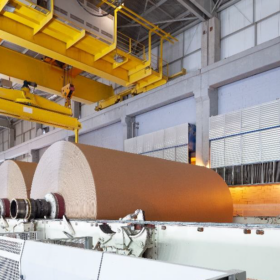
World’s largest steam-producing heat pump comes online in Finland
Turboden, part of Mitsubishi Heavy Industries, has energized what it calls the world’s largest steam-producing heat pump, delivering 12 MWth of superheated steam using low-grade waste heat and CO₂-free electricity with a coefficient of performance 10% above its guaranteed value of 2.

AI can now predict solar cell efficiency from wafer quality
Korea University researchers have developed a machine-learning framework that predicts solar cell efficiency from wafer quality, enabling early wafer screening and optimized production paths. Using over 100,000 industrial data points, the approach combines predictive modeling, process optimization, and explainable AI to support photovoltaic manufacturing.
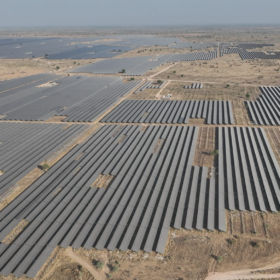
ACME Solar signs 190 MW hybrid PPA with SECI in India
ACME Solar Holdings has signed 25-year 190 MW wind-solar hybrid power purchase agreement (PPA) with Solar Energy Corp. of India (SECI) requiring 50% annual capacity utilization factor and 80% daily peak supply obligation.

Adani to invest $100 billion in AI data centers in India
Adani Group plans to invest $100 billion by 2035 to build hyperscale, renewable-powered data centers across India, targeting 5 GW of capacity. The company says the program could catalyse a further $150 billion in related industries, creating a $250 billion AI infrastructure ecosystem over the next decade.
