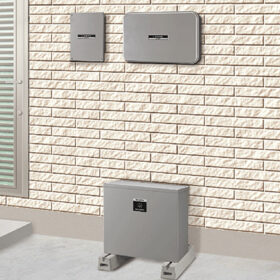
Japanese utility uses Sharp PV-linked home batteries for grid balancing
Japanese utility Tohoku Electric Power is using Sharp’s residential batteries and AI-powered energy management systems to balance grid demand and optimize household solar energy use. Customers in the program can earn points redeemable for local products.
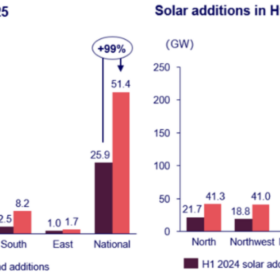
China’s new auction system drives steep solar price declines
Wood Mackenzie says first provincial auctions under China’s new pricing rules pushed solar bids up to 32% below settlement, signaling tighter margins and a shift to slower, more sustainable growth.
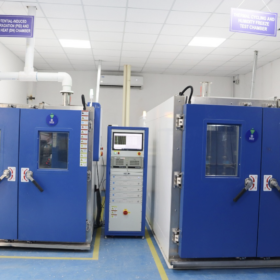
India’s Jakson Solar opens in-house lab for PV reliability testing
Jakson Solar has commissioned an advanced facility in India to perform continuous reliability testing on PV modules under extreme simulated conditions.

GoodWe debuts PV-driven heat pump water heaters
The Chinese manufacturer said their new residential heat pump water heaters deliver a coefficient of performance of up to 4.2, with a heating capacity ranging from 4.5 kW to 5 kW. The units are available with water tanks in 200 L, 300 L, and 500 L sizes.
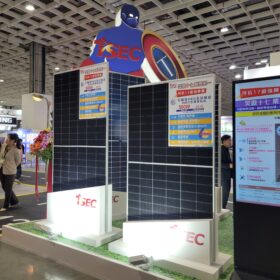
TSEC unveils typhoon resistant glass-glass solar modules
The Taiwanese manufacturer showcased the new module range at Energy Taiwan trade show. Two modules in the lineup boast a wind resistance of 17 on the Beaufort scale, making them typhoon ready, according to the company.

The Hydrogen Stream: Germany audit warns of missed H2 goals
Germany’s Federal Court of Audit (Bundesrechnungshof) says the nation’s hydrogen strategy is falling short despite heavy subsidies, while Pulsenics and Endua have launched the first commercial AI-based monitoring system to improve electrolyzer performance under fluctuating renewable power conditions.

Chinese PV Industry Brief: DK Electronic starts copper paste production
DK Electronic Materials has launched mass production of high-copper paste, with full gigawatt-scale manufacturing lines to be operational by the fourth quarter.

Photovoltaic-thermoelectric generators can boost power beaming efficiency
Researchers from China and United Arab Emirates tested a photovoltaic-thermoelectric generator module performance in the receiving end of a laser wireless power transmission system. Under varied atmospheric turbulence conditions, they found the device was able to address thermal stress and improve PV receiver performance.

India solar module output to exceed 125 GW in 2025, says Wood Mackenzie
Wood Mackenzie says in a new report that India’s solar manufacturing boom risks overcapacity and calls for a shift from expansion to cost competitiveness.
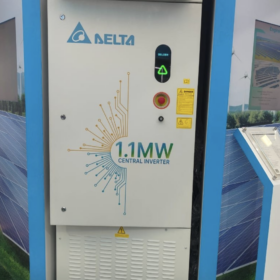
India-developed inverter targets large-scale solar expansion
Delta Electronics has unveiled a 1.1 MW modular inverter made in India, designed for large-scale PV projects and built to expand local manufacturing capacity to 5 GW within three years.
