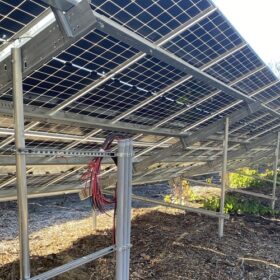
Parameter analysis of 842 bifacial solar modules from 236 manufacturers
An international research team has conducted an extensive overview of bifacial solar modules from 39 countries. Their analysis took into account the best of the median values indicated in the product specifications and found that heterojunction and back-contact panels provide the best parameters.

UNDP seeks bids for hybrid solar at wastewater plant in Ukraine
The United Nations Development Programme (UNDP) is running a tender for a hybrid solar system to support a wastewater treatment facility in northeastern Ukraine. The deadline for applications is Aug. 12.
Moldova introduces guarantees of origin certificate for renewables
Moldova has introduced an electronic guarantees of origin system to certify renewable energy production, with certificates recognized across the European Union through integration with the EU-wide register.

Hungary’s solar capacity surpasses 8 GW
Hungary’s Ministry of Energy says rising levels of solar production contributed to keeping the share of imported electricity below 20% across the first six months of the year, compared to nearly 25% over the same time period last year.
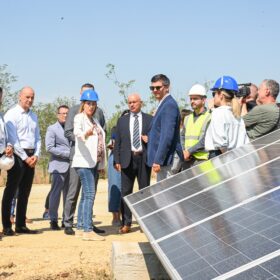
Serbia switches on 10 MW of solar
The 10 MW Petka power plant is the first solar site to be operated by state-owned utility Elektroprivreda Srbije.
Slovenia opens €29 million call to fund priority solar, wind projects
Slovenia has opened a €29 million ($33.7 million) call under the European Union’s Modernisation Fund to support priority solar and wind projects, with applications due by Jan. 7, 2026.
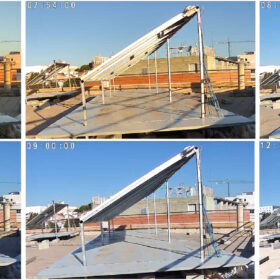
Precise backside irradiance modeling for bifacial PV is often unnecessary
A European research group has developed a new “empirical” method for measuring the backside irradiance of bifacial PV system. The proposed approach was tested across several European locations and it was found to enable annual performance calculations with a fixed backside irradiance share value.

Romania removes double taxation on energy storage
Under the new ‘Order on the Methodological Norms’, electricity charged from the grid and subsequently discharged back onto it is exempt from several key regulated tariffs in Romania.

Poland allocates 1.67 GW of PV in renewables auctions
Figures from Poland’s Energy Regulatory Authority (URE) show that solar accounted for 178 of the 181 successful bids awarded under the country’s latest renewables auctions. Auctions covering hydroelectric power plants, agricultural biogas plants, and biomass went unresolved due to a lack of valid offers.
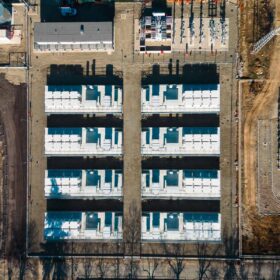
Ukraine’s largest battery storage project enters commissioning phase
Ukraine’s 200 MW/400 MWh battery project dwarfs most Eastern European installations, and is expected to come online in October 2025, ahead of the winter.
