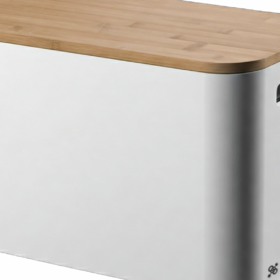
FlexHome Energy offers home battery in utility-sharing deal
A new product from German supplier FlexHome Energy could offer residents without a solar array, such as apartment dwellers, the chance to make electricity savings and strengthen the grid.
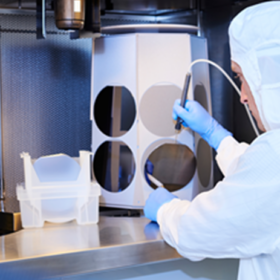
Fraunhofer ISE streamlines use of epitaxial wafers in TOPCon solar cell manufacturing
Researchers at the German research institute have demonstrated that the so-called EpiWafers could be used directly for solar cell fabrication without needing a pre-gettering step. Their experiments provide a proof of principle* for epitaxially grown silicon wafers from German wafer manufacturer NexWafe GmbH.
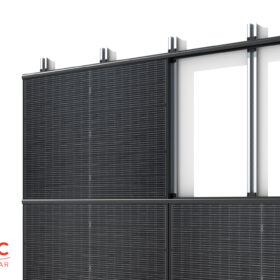
IBC Solar launches mounting systems for rooftop, facade PV systems
Germany’s IBC Solar has developed two new mounting systems for rooftop and facade PV installations: the WallFix system, made of aluminum and stainless steel, and the AeroFix G3.1, designed for modules up to 3 square meters.

Top cell transparency remains critical challenge for tandem solar cells
New research from Germany has shown how improving top-cell transparency and performance remains key to the commercialization of tandem perovskite-silicon solar cells, as well as for all other types of tandem devices. The analysis demonstrated, in particular, that the top cell must achieve higher single-cell efficiency to compensate for reduced transparency.

‘Most personal protective equipment is made to fit men’
This week Women in Solar Europe (WiSEu) gives voice to Canan Koç Yasar, VP HSSE-S at Germany’s Uniper Renewables. She says that policies and practices that shape workplace safety, health, and security are mostly intended to satisfy men’s needs and stresses the importance of designing workplace systems that reflect the realities of everyone on the team.
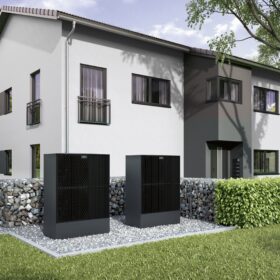
Viessmann launches new residential air-to-water heat pumps
The Germany manufacturer said its new heat pump systems use propane (R290) as the refrigerant and are able to provide a maximum flow temperature of 70 C. Their coefficient of performance ranges from 4.7 to 5.1.

The Hydrogen Stream: Scandinavia, Italy may produce grid hydrogen by 2030
Aurora Energy Research says the global electrolyzer pipeline now totals around 1.3 TW, with 114 GW in development and 32% expected online by the end of 2026. The firm cites stronger EU policy support and growing momentum in hybrid power purchase agreements (PPAs).

Germany allocates 2.63 GW in latest utility-scale PV tender
Germany’s latest auction for utility-scale solar concluded with prices ranging from €0.0399 ($0.0455)/kWh to €0.0488/kWh. The procurement exercise was significantly oversubscribed.

Home batteries have same probability of catching fire as other appliances
New research from Germany shows that home batteries have much lower chances of being hit by fire than electric vehicles and most home appliances. The researchers warned, however, that fires in residential storage systems can be more dangerous than those of burning tumble dryers.
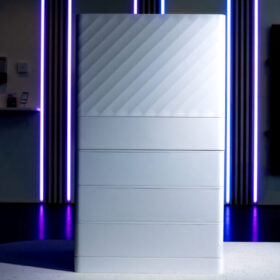
1Komma5° releases residential battery for non-PV homeowners
1Komma5° has launched PowerHarvester, a lithium iron phosphate battery system for residential customers without solar. It is offering six power classes and storage capacities from 7.7 kWh to 27.2 kWh.
