
Panasonic glass-based perovskite solar panels tested in office windows
The Japanese electronics manufacturer is testing its glass-based perovskite solar PV technology in office windows made by YKK AP, a construction and building materials company.

The Hydrogen Stream: EWE begins work on 320 MW hydrogen plant in Germany
EWE says construction has started on its 320 MW hydrogen plant in Germany as it seeks regulatory reforms, while Japan Suiso Energy and Kawasaki Heavy Industries have broken ground on a commercial-scale liquefied hydrogen terminal set to begin operations in 2030.

Japan pilots low-weight solar panels, perovskite windows for buildings
Mitsui Home and Tokyo Gas have revealed plans to deploy Japan’s first combined on-site and virtual solar power purchase agreement (PPA), cutting factory emissions and maximizing rooftop energy use.

Sharp offers space-qualified solar cells, plans perovskite-silicon tandem production
The Japanese technology company is offering three types of space-grade compound solar cell designs for satellites and spacecraft.

Japan’s PV module shipments hit 1.28 GW as residential demand accelerates
Japan’s solar module shipments reached 1.28 GW in the first quarter of fiscal 2025, supported by strong residential demand and ongoing dominance by foreign manufacturers, with domestic production limited to just 5% of total output, according to the Japan Photovoltaic Energy Association (JPEA).
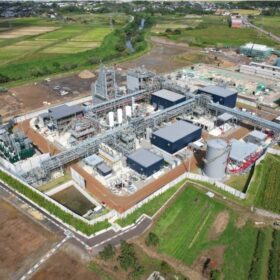
The Hydrogen Stream: Inpex launches blue hydrogen, ammonia demonstration plant in Japan
As Inpex launches its hydrogen park in Japan, ITM Power announces a possible delivery of 710 MW of electrolysers to Germany’s Stablegrid and Shell works on a 100 MW electrolyser in Germany.
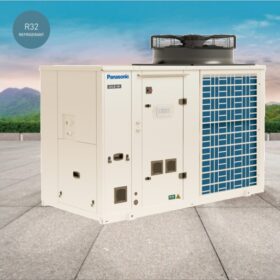
Panasonic launches new air-cooled heat pumps
The heating and cooling business of the Japanese giant has released a new range of heat pumps for commercial projects. The systems have capacities of 40 kW and 50 kW.
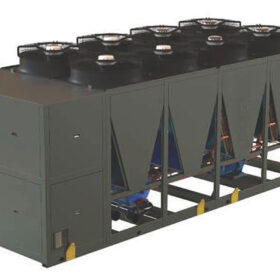
Rinnai unveils air-to-water heat pumps for commercial, industrial use
The systems use propane as the refrigerant and range in capacity from 40 kW to 410 kW. Their coefficient of performance reaches up to 3.88.
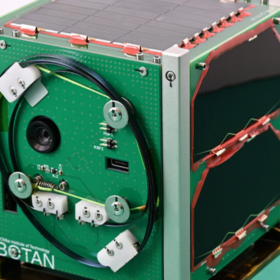
Idemitsu developing CIGS solar modules for satellites
Japan’s oil giant Idemitsu Kosan and U.S.-based Source Energy Company announced a collaboration to develop copper indium gallium-selenide solar modules and arrays for satellite and space applications.
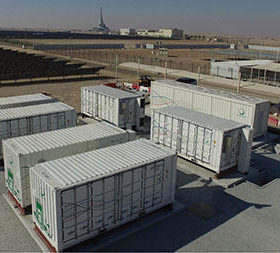
Japan’s NGK discontinues manufacturing of sodium-sulfur batteries
The manufacturer cites rising material costs, heightened competition from lithium-ion batteries, and the slow uptake of long-duration storage technologies as the reasons for the decision.
