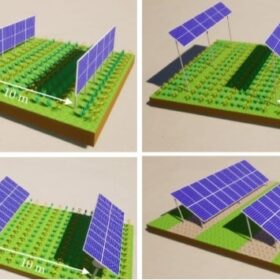
All agrivoltaic cropping systems at a glance
An international research team reviewed agrivoltaic systems, highlighting challenges in design, crop performance, and PV efficiency, while mapping their global potential. They call for innovative layouts, targeted crop selection, and improved modeling to maximize energy yield and land-use efficiency.

Abu Dhabi unveils solar-plus-storage self-supply policy
The Abu Dhabi Department of Energy has introduced a policy designed to support deployment of solar systems for self-consumption, with the first phase of the policy targeting the agricultural sector.
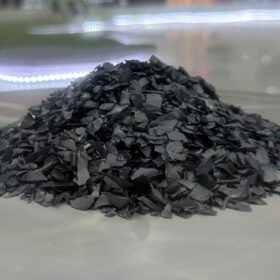
United Solar begins production at Omani polysilicon factory
The factory is located in Oman’s Sohar Freezone and will be capable of supporting the production of up to 40 GW of solar modules annually once at full capacity.

Cornex secures 11.5 GWh of battery orders from Saudi Arabia, Egypt
The Chinese manufacturer will supply 5.5 GWh of energy storage products to Saudi Arabia and another 6 GWh to Egypt, as it works to expand its global footprint.

Saudi Arabia could hit net-zero emissions by 2060, with 151 GW of solar
Saudi researchers outlined pathways for Saudi Arabia to reach net-zero power sector emissions by 2060, requiring up to 3.6% of land – mostly for onshore wind – with 151.3 GW of solar PV covering only 0.16% of the country.
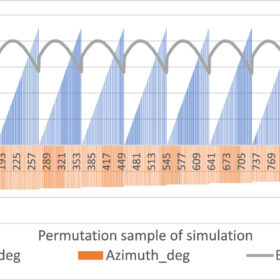
The optimal fixed tilt, azimuth angles for bifacial PV in Saudi Arabia
A new bifacial PV optimization model for 18 Saudi Arabian cities identifies optimal tilt and azimuth, showing rear-side irradiance can boost annual energy yield by 8–12 % and shifts tilt 3°–11° higher than monofacial modules. The framework validates previous studies, highlights high- and low-performing locations, and serves as an early-stage planning tool before detailed project simulations.

Reducing PV module temperature with leaf vein–inspired fins
Researchers in Iraq have developed biomimetic leaf vein–inspired fins for photovoltaic panels, with reticulate (RET) venation reducing panel temperature by 33.6 C and boosting efficiency by 18% using passive cooling. Their study combines 3D CFD simulations and electrical evaluations to optimize fin geometry, offering a sustainable alternative to conventional cooling methods.

Cyprus installs 122 MW of solar capacity in 2025
Self-consumption PV projects accounted for most of the new solar capacity added in Cyprus last year, despite record levels of renewable energy curtailment, according to industry data.

Flexible perovskite solar cells with tunable color, transparency
Researchers at Hebrew University of Jerusalem have demonstrated 9.2% efficient printable semi-transparent, flexible halide perovskite solar cells with tunable color and transparency.
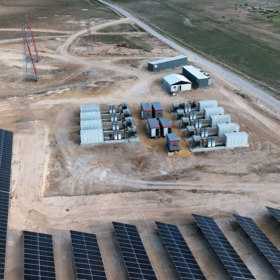
Turkey switches on first major solar-plus-storage project
Oze Grup’s Sivrihisar project pairs a 49.2 MW solar plant with 34.1 MWh of battery storage, marking Turkey’s first grid-connected hybrid facility approved under the sustainable finance framework (DGES).
