UK T-4 auction clears path for nearly 7 GW of new battery storage by 2028
Out of 6.9 GW of prequalified battery energy storage systems (BESS), equal to 1.9 GW derated capacity, about 1.8 GW of derated BESS secured 15-year contracts in the UK’s T-4 auction – nearly double last year’s volume. Just a week earlier, the T-1 auction also set a record for BESS procurement.

Belgium’s Wallonia region added 92 MW of solar in 2024
The rate of solar installations slowed in the Belgian region of Wallonia last year, as government incentives for residential solar came to an end. Brussels-based renewable energy federation Edora says deployment will need to accelerate across all market segments if the region is to meet its 2030 solar targets.

Solar panel glare temporarily cancels air traffic at Amsterdam Airport
On March 4, Schiphol’s Polderbaan Runway has been unavailable to landing traffic between 10 am and 12 pm in sunny weather due to glare from solar panels.
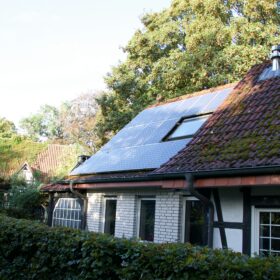
Rooftop solar could supply two-thirds of global power, study finds
Researchers at the University of Sussex have found that widespread deployment of rooftop solar could cover the vast majority of the world’s electricity consumption, while lowering global temperatures by up to 0.13 C.
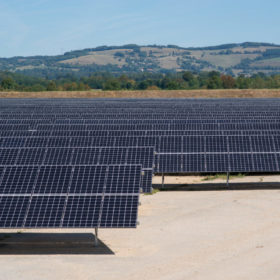
France sharply reduces PV targets in draft energy program
In the latest version of the draft Pluriannual Energy Program, photovoltaic targets have been revised downwards: For 2035, they have been reduced from the 75 GW to 100 GW range to 65 GW to 90 GW. For 2030, the target would be 54 GW, the low end of the 54 GW to 60 GW range submitted for consultation at the end of 2024.

Heat pumps in Germany nearly twice as expensive as in UK
RWTH Aachen University conducted the price comparison in cooperation with Octopus Energy. The reasons are significantly different technical and regulatory requirements, but also the funding system.

Italy strikes down Sardinian moratorium on renewables
The decision is significant, as “it sets out principles whose scope exceeds the issue of the moratorium, affirming the unconstitutionality of regional regulations that conflict with the decarbonization objectives established at the European and national level,” says attorney Claudio Vivani.
RWE, TotalEnergies close 15-year hydrogen PPA in Germany
RWE and TotalEnergies have signed a 15-year power purchase agreement (PPA) under which RWE will supply over 30,000 tons of green hydrogen per year to TotalEnergies’ Leuna refinery in Germany from 2030 to 2044.
Dutch consortium seeks to reduce costs of hole transport layers for perovskite solar cells
Two Dutch manufacturers have teamed with TNO’s perovskite solar cell experts to integrate spatial atomic layer deposition equipment to produce ultra-thin, high-quality nickel-oxide hole transport layers in a roll-to-roll process. The team targeting production integration in mid-2027, with full-scale production by 2030.
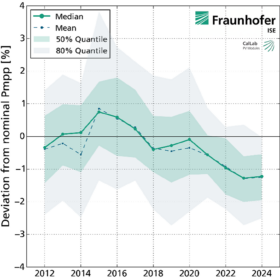
Fraunhofer ISE research finds solar module output ‘often overstated’
A longitudinal research project from the Fraunhofer Institute for Solar Energy Systems ISE reveals that since 2017, the institute has measured less power on average in a solar module than promised by the manufacturer.
