
France adds 4.2 GW of solar in first nine months of 2025
Statistics from Enedis show that 4.2 GW of solar connected to France’s grid in the January-September period, including 82 MW paired with storage, marking a slight decline from 2024.

Future-proof or fail: how battery storage projects can thrive in Germany
Germany’s battery storage boom is real but so are the bottlenecks. As capital pours in and gigawatt-hour-scale projects near launch, grid connection delays and regulatory uncertainty are threatening to dampen momentum. At the 3rd BVES Investor Summit in Berlin, more than 500 industry leaders gathered to weigh the hype against the hard realities.

Mercedes unveils car with 20% efficient ultra-thin solar coating
Mercedes-Benz unveiled its first car prototype with a silicon-free, 20%-efficient nanoparticle solar coating that powers the vehicle even when off and uses modules thinner than a human hair.

Deployable tracker-based rooftop PV system for stadiums
An international research team has developed a tracker-based rooftop PV system that can be installed on both new and existing stadiums. The proposed design reportedly allows for easier deployment and delivers higher power output compared to conventional stadium PV covers.
Ireland sets four-hour, 75%-efficient, 201 MW storage target by 2030
EirGrid, the transmission system operator (TSO) for the Republic of Ireland, has launched a consultation outlining how it will procure its first long-duration energy storage (LDES) capacity.

Spain makes agrivoltaic projects eligible for farm subsidy program
Spain’s new agricultural decree allows land hosting solar arrays to qualify for Common Agricultural Policy payments if farming remains the primary activity.
The Hydrogen Stream: mixed evidences from Germany’s hydrogen market
Lhyfe has opened its first hydrogen plant outside France in Germany, while the Hamburg Green Hydrogen Hub is advancing plans for a 100 MW electrolyzer at the former Moorburg coal site.

Ireland expands scheme offering free solar systems to the medically vulnerable
The Solar PV Scheme for Medically Vulnerable Customers covers all homeowners dependent on electrically powered medical equipment regardless of their energy supplier. It includes a 2 kW solar PV system and around 470 homes have benefited to date.
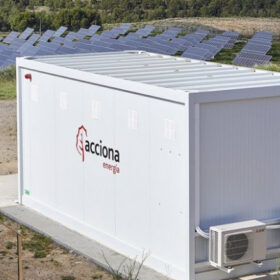
Spain updates grid rules to expand energy storage, renewables integration
Spain has overhauled its grid-access rules to support energy storage, granting hybrid renewables-plus-storage projects equal dispatch priority and full revenue rights for stored electricity.

Dutch energy suppliers update electricity origin reporting after review
The Dutch energy regulator has confirmed that all energy suppliers now provide verified electricity origin data, improving transparency for households and businesses.
