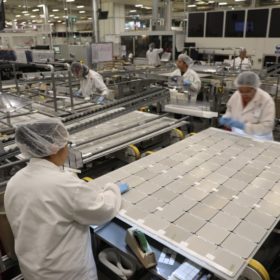
Chinese PV Industry Brief: JinkoSolar reports strong H1 earnings
JinkoSolar has reported a net profit of CNY 3.8 billion ($526.6 million) for the first half of 2023, while Maxeon has revealed plans to open a 3 GW TopCON cell and module factory in the United States.
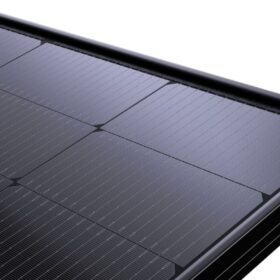
Winaico launches new 430 W n-type TOPCon solar module series
The compact bifacial glass-glass modules are to be delivered from the third quarter. They are available in two different variants with an efficiency of 22.02 and 21.76%.
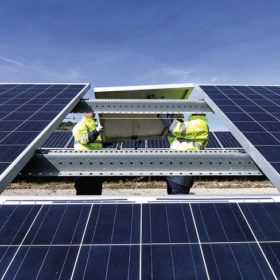
The weekend read: Mining for gold in legacy PPAs
As the pace of solar installations quickens, developers are racing to find the best remaining sites and optimize their position in interconnection queues. But what if the best investment opportunity is hidden in a site built a decade or more ago? Time gets the better of us all, and many early solar sites no longer perform as expected. Yet those sites generally sell power at prices today’s developers can only dream of. Chris Chappell and Stephen Shirey of Clean Energy Associates examine what can be done to unlock the value in these legacy sites.
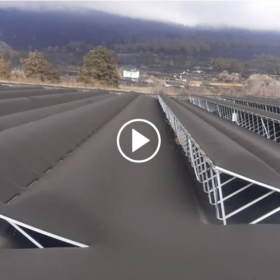
Volcano proof PV
Panels being covered in volcanic ash can cause several problems – as has been seen recently with ongoing eruption in the Canary Islands. The weight of the ash may be too much for the structure to bear, sharp ash particles or small stones within the ash can scratch module glass, and acids or sulfur compounds contained in the ash can cause corrosion on the backsheet.
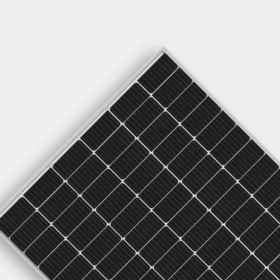
Longi launches 420 W panel for rooftop applications
The monocrystalline module provider added a new product to its Hi-MO 4 series. The new panel has a power output of 410/420 W and a conversion efficiency between 20.5% and 21.0%. The width of the module is standardized, while three different length options can be chosen to maximize capacity in a rooftop project.
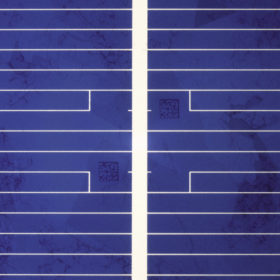
The weekend read: Pirates of the PV industry
Product piracy is a well-known threat in many industries, and in solar the risk posed by poor quality products from disreputable manufacturers making their way onto rooftops and other PV installations should not be underestimated. With manufacturers investing in solutions to protect against inferior products bearing their logo, pv magazine looks at the size of the problem.
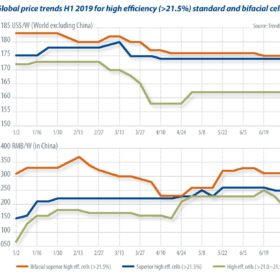
Tendency toward diversification
Looking back at the PV market in 2018, micro module technologies started maturing in development and moving on to mass production, writes TrendForce analyst Lions Shih. Modules are no longer limited to a single design as before, but rather continuing on the path toward diversification in 2019. The situation is spreading into other areas, as may be seen in the upstream silicon wafer and cell segments.
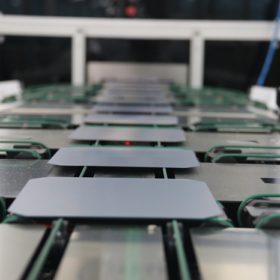
Cell prices have tumbled again since early June
The latest figures show the solar policy vacuum, and related dearth of demand in China earlier this year accelerated price reductions for cell makers. Although prices are expected to rebound in line with renewed thirst for solar in China, cell makers such as Tongwei are feeling the pain.
Dear European solar industry: Let’s lead the interconnected platform before it is too late
While China is single-handedly reducing CAPEX for modules and inverters, Europe understands that hardware won’t be the holy grail – generally speaking. But what is? Perhaps it is time for a new strategy to surf in front of the digital wave.

The weekend read: Double glass can spell double trouble
Glass-glass modules are built to survive the toughest conditions and can deliver module lifetimes far exceeding the 20-30 years expected of glass-foil. The module concept is ideally positioned to catch the building bifacial wave, but only if quality concerns are addressed, warn some experts in the field.
