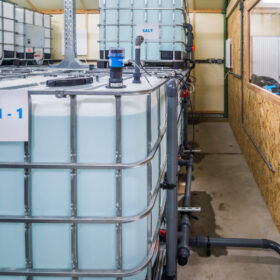
Long-duration storage as an antidote to grid congestion, renewables curtailment
RenewaFLEXNL, a three-year Dutch initiative led by TNO, aims to accelerate long‑duration energy storage (8–100 h) to reduce grid congestion and better integrate renewable energy. pv magazine spoke with the project coordinator, Iraxte Gonzalez Aparicio, about diverse storage technologies, real-world applications, regulatory guidance, and energy management system tools to support large-scale solar‑plus‑storage deployment in the Netherlands and beyond.
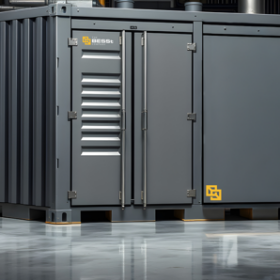
U.S. startup unveils zinc-polyiodid redox flow battery with energy density of 320 Wh/L
BESSt announced that its new redox flow battery technology delivers 20 times the energy density of conventional vanadium flow storage systems. The battery is based on a zinc–polyiodide redox flow chemistry developed by the Pacific Northwest National Laboratory.
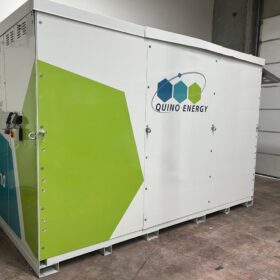
How organic flow batteries could erase the need for critical-mineral dependency
Vanadium flow and lithium-ion batteries both require materials described as critical by the US Department of Energy (DOE).

Swiss developer breaks ground on 800 MW/1.6 GWh redox flow storage project
Flexbase Group has broken ground on an 800 MW/1.6 GWh redox flow battery project in Laufenburg, Switzerland, in what could become one of Europe’s largest flow storage systems. The multi-use site will integrate utility-scale storage, an AI data center, and district heating.

Chinese scientists build polysulfide-iodide redox flow battery with 87.9% energy efficiency
Scientists in China designed a suplhuer-based redox flow battery with a peak power density of 95.7 mW cm2 and an average energy efficiency of 76.5% at 30 mA cm2 within 50 cycles.
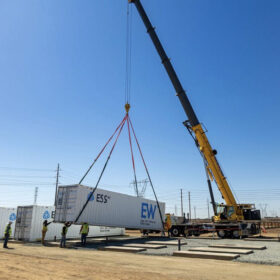
Go with the flow (batteries)
There is a gap in the market for long-duration energy storage (LDES), according to US-based manufacturer ESS Inc. – one which can’t be plugged with lithium-ion chemistry. Hugh McDermott, of ESS Inc. tells pv magazine how he thinks iron flow batteries fit into the energy system of the future, as the company pursues global expansion.

World’s largest vanadium redox flow project completed
Dalian-headquartered Rongke Power has completed the construction of the 175 MW/700 MWh vanadium flow battery project in China, growing its global fleet of utility-scale projects to more than 2 GWh.
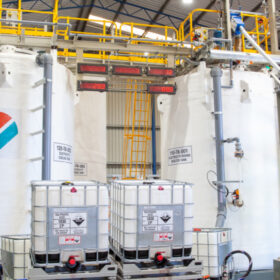
Australian-made vanadium flow battery project could offer storage cost of $166/MWh
Australian Vanadium Limited (AVL) has moved a vanadium flow battery (VFB) project to design phase with the aim of developing a modular, scalable, turnkey, utility-scale battery energy storage system (BESS).
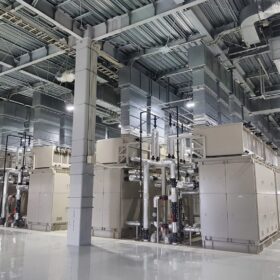
China to host 1.6 GW vanadium flow battery manufacturing complex
The all-vanadium liquid flow industrial park project is taking shape in the Baotou city in the Inner Mongolia autonomous region of China, backed by a CNY 11.5 billion ($1.63 billion) investment. Meanwhile, China’s largest vanadium flow electrolyte base is planned in the city of Panzhihua, in the Sichuan province.
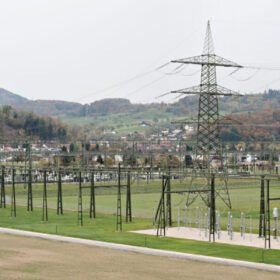
Switzerland to host world’s largest redox flow storage project
Flexbase plans to build a 500 MW redox flow storage project in Laufenburg in early 2025.
