
Trump tariffs deal damage to US solar
“It’s a changed world in the renewables space,” said Stefan Reisinger, partner at Norton Rose Fulbright.
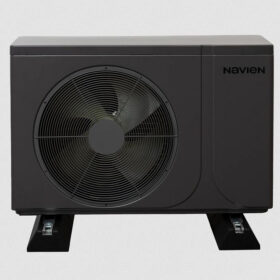
Navien unveils 4-17 kW air-source heat pump for residential applications
The South Korean heating specialist said its new heat pump system can achieve a seasonal coefficient of performance of up to 4.79 and flow temperatures of up to 75 C.
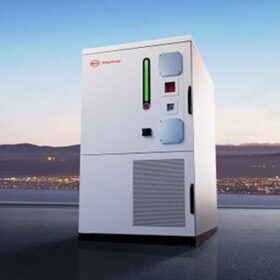
BYD launches new C&I highly integrated battery storage solution
The Chinese manufacturer has unveiled its latest generation commercial and industrial (C&I) energy storage system, Chess Plus. The product is currently available in China and the US, with the European version under evaluation.
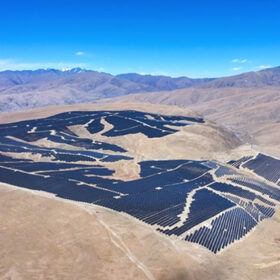
Tibet’s largest solar-storage project powers up at 4,500 m
China’s Huaneng Group has switched on a 250 MW solar plant collocated with a 250 MWh energy storage system in Tibet, marking a milestone in high-altitude renewable energy deployment.

South Africa targeting up to 5 GW of new renewables per year
The South African Renewable Energy Master Plan (SAREM) aims to deploy at least 3 GW of new renewables per year, increasing to 5 GW by 2030, while creating 25,000 jobs in the country’s renewable energy and storage sectors.
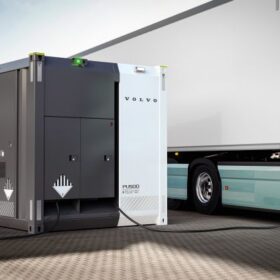
Volvo launches battery energy storage system with integrated EV charger
The Swedish manufacturer has launched an integrated all-in-one system which features a 450-540 kWh battery energy storage component and a 240 kW DC fast charger. The system is designed for powering sites, whether in grid-connected or island mode.
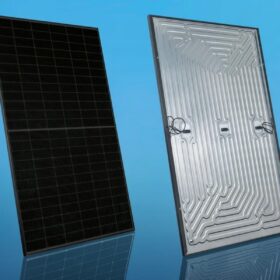
TWL unveils PVT panels for ground-source heat pumps
The German specialist for solar thermal energy and heat storage said its new PVT collectors rely on double-glass and monocrystalline TOPCon cells. The product has a power conversion efficiency of 22.5% and a maximal thermal ouput of 1,100 W.
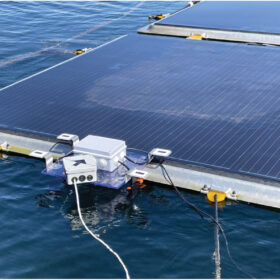
New model to measure wave-induced loss in floating PV
Researchers have developed a three-step technique to estimate power generation loss in floating PV farms resulting from changes in tilt and mismatch losses. The new module was tested in an experimental setup and showed that electricity losses mainly depend both on system design and location.
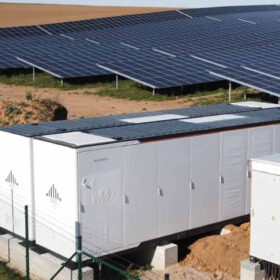
China’s battery storage capacity doubles in 2024
Installed capacity exceeds 62 GW in China as the market shifts toward large, centralized systems with power outputs greater than 100 MW.
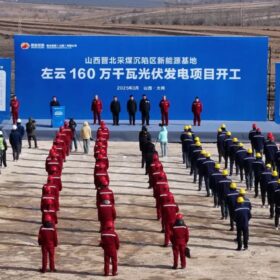
Jinneng launches 5 GW solar project in coal zone in China
China’s Jinneng Group has started building 5 GW of solar across three projects in a coal mining subsidence zone in northern China, with a $2.3 billion investment. The projects, bolstered by 2 GW of thermal power and 3.4 GWh of energy storage, will supply 9.3 TWh of clean electricity per year.
