
Key takeaways from Austria’s Solar Solutions
Around 100 exhibitors presented their products at the Vienna trade fair. Visitor numbers were limited, partly because the event coincided with the launch of the first funding call for photovoltaic systems and storage this year.

Record solar, wind surge drives 3.3% drop in India’s fossil generation in 2025
India’s renewable power generation from solar, wind, hydro and bioenergy rose by a record 98 TWh (+24%) in 2025, driven by strong growth in solar and wind, according to Ember. The increase was twice the country’s electricity demand growth of 49 TWh, which was relatively low due to milder temperatures and slower industrial activity. As a result, India’s fossil power generation fell by 3.3%.

U.S. government sets preliminary anti-dumping duties on solar imports from India, Indonesia, and Laos
The U.S. Department of Commerce has issued preliminary anti-dumping determinations for three key solar-exporting nations, establishing duties of up to 123% on crystalline silicon photovoltaic cells and modules.

Australia’s energy commission targets lower solar curtailment
Australia’s Energy Market Commission says introducing a new distribution planning framework and undertaking enhanced data reporting will help to reduce rooftop solar curtailment.
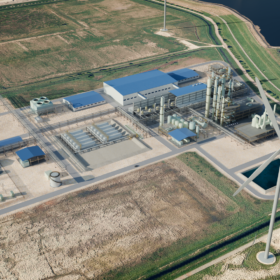
Dutch government grants priority status to planned polysilicon factory
The Ministry of Economic Affairs and Climate of the Netherlands has identified a planned polysilicon factory in the country as of strategic importance under the Net Zero Industry Act.
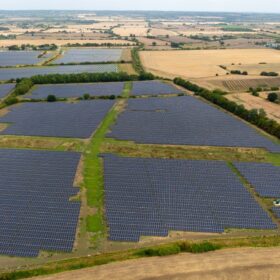
UK solar developer secures $1.1 billion financing package
Enviromena announces a £825 million ($1.1 billion) senior portfolio financing package, providing immediate capital to support the buildout of a 1 GW pipeline. The credit facility was underwritten by a group of institutional investors.
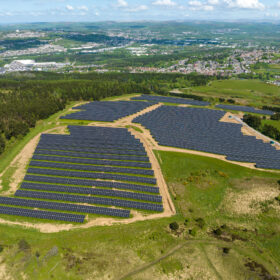
UK solar generation hits record 15 GW as gas falls to historic low
Solar set a new generation record on Great Britain’s electricity grid during a week that also saw zero-carbon supply reach an all-time high. The new records come as the grid operator expands demand-side flexibility markets in anticipation of lower summer demand driven by strong solar irradiance.
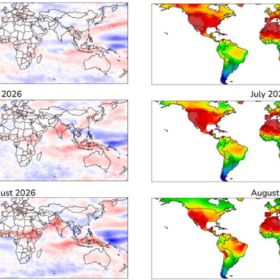
Developing El Niño points to stronger solar conditions across Australasia and South Asia
In a new weekly update for pv magazine, Solcast, a DNV company, provides a June–August 2026 outlook indicating mostly neutral to positive solar irradiance globally, with stronger gains in regions like Australasia, South Asia, West Africa, and Central America—patterns consistent with a developing El Niño. Negative anomalies are limited and mostly early-season, while Europe and the U.S. show modest or mixed signals, with improvements or neutrality dominating as the season progresses.

Colombia reopens long-term energy contracting with new renewables auction
Colombia has launched a 15-year auction scheme to procure solar, storage, and hybrid capacity, with delivery starting in 2030. The mechanism introduces time-of-use products and aims to improve reliability while expanding renewable energy uptake.
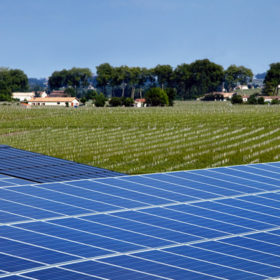
France streamlines renewables environmental permitting with new provisions
Published in the French Official Journal on April 22, a new decree aims to speed up the handling of appeals against strategic environmental projects, particularly in the renewable energy sector. It introduces direct access to administrative courts of appeal and tightens rules on deadlines and procedures for challenging projects.
