
Solar to power Ukrainian community’s water utility
A village in eastern Ukraine has received a donated solar-plus-storage system to secure water access amid ongoing attacks on energy infrastructure.

Sweden adds 430 MW of solar in H1 2025
Sweden installedx 430 MW of solar in the first half of 2025, with industry group Svensk Solenergi noting slower growth than last year but rising interest in battery storage driven by green tax deductions for households.
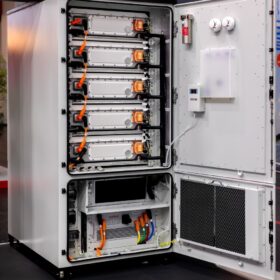
GoodWe launches 125 kW/261 kWh all-in-one C&I battery
GoodWe has introduced a 125 kW/261 kWh all-in-one battery for commercial and industrial use in China, with applications spanning factories, farms, EV charging stations, commercial sites, and grid or off-grid systems.
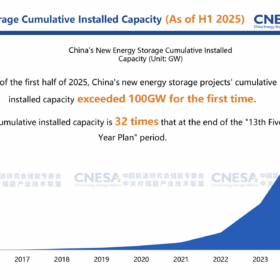
China new energy storage capacity tops 100 GW, surpasses hydro
China’s installed energy storage capacity reached 164 GW by June 2025, according to the China Energy Storage Alliance (CNESA). More than 100 GW came from new energy storage excluding pumped hydro, driven by accelerating deployments and market shifts.
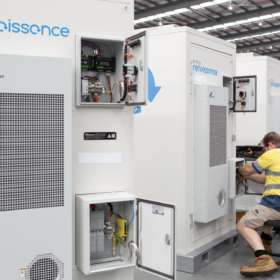
Battery maker Energy Renaissance enters administration in Australia
Lithium ion battery maker Energy Renaissance has gone into administration in Australia after a key investor pulled out of a planned funding round, leaving the company in a cash crisis.
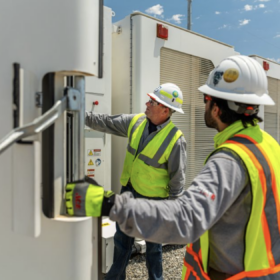
Fluence launches 35 GWh battery factory in Vietnam
Fluence is significantly expanding its manufacturing footprint in Vietnam, following delays in scaling its new production facilities in the United States.

Photovoltaics for mango drying
Scientists have created a solar cabinet dryer for mango slices, with PV-powered forced convection. Placing mango slices of different thicknesses inside, they have measured the operation of their device against two reference methods and have found that thermal efficiency reached 30%.

Voltfang opens second-life battery plant in Germany, billed as Europe’s largest
Voltfang has opened what it claims is Europe’s largest second-life battery storage plant in western Germany, with 250 MWh of annual capacity expected in 2026 and a target of 1 GWh before 2031.
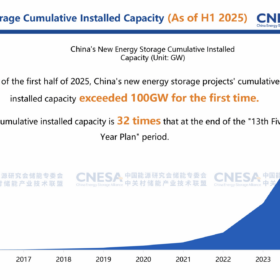
China new energy storage tops 100 GW as lithium overtakes pumped hydro
China’s new energy storage capacity exceeded 100 GW by June 2025, with total installations reaching 164.3 GW, surpassing pumped hydro additions amid accelerating deployments and changing market dynamics, according to the China Energy Storage Alliance (CNESA).
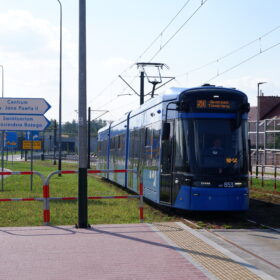
Feasibility assessment for deploying PV panels on tram tracks
New research from Poland has suggested installing 891 PV panels along the entire tram platform and inter-track spaces of four major transportation hubs. The analysis showed that the PV system could power all of the city’s tram stops, the passenger information system, and meet 10% of demand from service depots.
