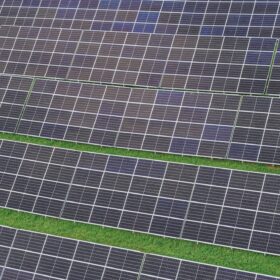
Guyana plans three utility-scale solar parks
The three new utility-scale projects in region ten of Guyana, with a combined capacity of 15 MW, form part of wider plans to deploy 33 MW of large-scale solar with accompanying energy storage across four of the country’s regions.

Battery storage in Spain could become unviable beyond 32 GWh
Scientists from the University of Seville have developed real-time optimization models showing that electricity storage in Spain may be approaching its economic limit, with cumulative capacities above 32 GWh depressing prices and undermining project profitability.
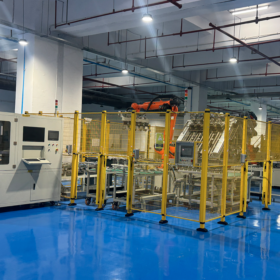
GoodEnough Energy starts production at 7 GWh BESS factory in India
India-based energy storage company GoodEnough Energy sazs it has commissioned a 7 GWh battery energy storage system (BESS) factory in Noida, with plans to expand capacity to more than 25 GWh over the next three years.
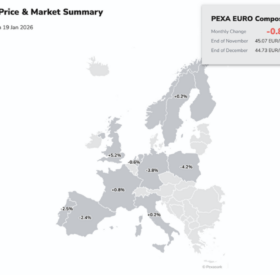
Pexapark records 24 European PPAs for 1.4 GW in December
Swiss analytics firm Pexapark says last year Europe’s announced power purchase agreement capacity and deal count fell by approximately 13% and 19% year-on-year, respectively.
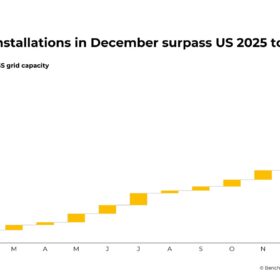
Global BESS demand jumps 51% in 2025 as installations top 300 GWh
Iola Hughes, Head of Research at Benchmark Mineral Intelligence, tells ESS News that 2026 is set to be another strong year for BESS, with forecast additions exceeding 450 GWh and no material supply constraints in sight. Meanwhile, the initial impact of rising lithium prices is already visible at the cell level, but the full effect has yet to ripple through to system pricing.

Key takeaways from Abu Dhabi’s World Future Energy Summit
WFES 2026 in Abu Dhabi underscored growing momentum for solar, storage, and C&I renewables across MENA, with batteries emerging as a key enabler for grid stability, agriculture, and data centers. Industry leaders pointed to Iraq, Libya, Yemen, and Saudi Arabia as key growth markets, highlighting rising interest in AI-driven data centers, solar-plus-storage solutions, and a broadening regional supply chain.

China’s top regulators summon battery giants, warn against ‘below-cost’ price wars
Four agencies told 16 leading firms to rein in irrational competition as China tightens oversight of power and storage batteries.

Poland draft grid law could slow solar and storage investment, warns industry
The Polish Photovoltaic and Energy Storage Association (PSFiME) says proposed changes to Poland’s energy law could impose high upfront costs on developers, raising market entry barriers and unfairly favouring large, well-capitalized players.
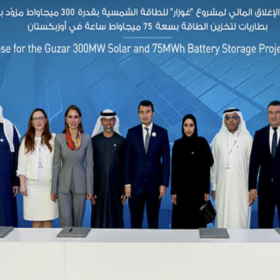
Masdar reaches financial close on 300 MW Uzbek solar project
The Abu Dhabi-based developer has secured $225 million ($193.6 million) for the development of a 300 MW solar plant linked to 75 MWh of energy storage in Uzbekistan, as part of its commitment to deploy 2 GW of renewables in the country.

Czechia deploys 696 MW of solar in 2025
Czechia’s solar market slowed in 2025, largely due to a downturn in residential deployments. The country’s solar association says that while it remains to be seen if the rate of installations will pick up this year, significant growth is expected in the storage market.
