
California enables flexible interconnection for solar and storage
California has introduced a flexible interconnection option allowing distributed solar and storage projects to connect without waiting for costly grid upgrades, though the required control hardware is not yet widely available.

Brazil tenders 50 MW of battery, solar and hybrid sites for isolated areas
Two lots were tendered, to serve communities in Amazonas and Pará, with BRL 312 million ($58 million) of equipment. In Amazonas, 20,165 MW will be installed via five solar and diesel-fired thermal generation sites. Pará will get a 30.1 MW battery, solar and diesel facility.

Australia registers first eight-hour duration grid battery
Australia has commissioned its first eight-hour-duration battery energy storage system, marking a key milestone in the nation’s transition to renewable energy.
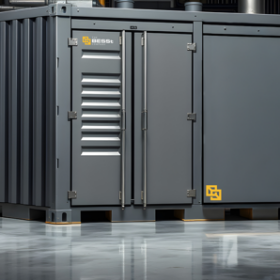
U.S. startup unveils zinc-polyiodid redox flow battery with energy density of 320 Wh/L
BESSt announced that its new redox flow battery technology delivers 20 times the energy density of conventional vanadium flow storage systems. The battery is based on a zinc–polyiodide redox flow chemistry developed by the Pacific Northwest National Laboratory.

The Hydrogen Stream: Japanese researchers develop green rust catalyst
Japanese researchers have developed a green rust–based catalyst for sodium borohydride, while South Korean scientists have created a framework to assess liquid hydrogen storage tanks for unmanned aerial vehicles (UAV).

Namibia approves 3 GW of solar for hydrogen production
The Namibian government has granted an environmental approval for a 3 GW solar farm. The energy generated is set to be used for green hydrogen and green ammonia production.
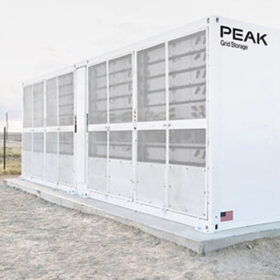
Peak Energy announces operation of first large-scale sodium ion battery in US
Denver-based Peak Energy claims its sodium-ion battery system offers the lowest operating cost of any energy storage technology on the market today.
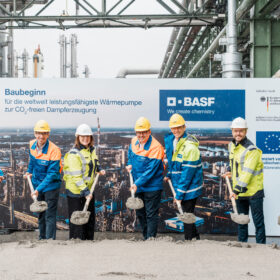
BASF begins building 50 MW industrial heat pump
Germany’s BASF has begun constructing an industrial-scale heat pump that will use electricity from renewables to produce up to 500,000 MT of CO2-free steam each year. Commissioning is scheduled for mid-2027.
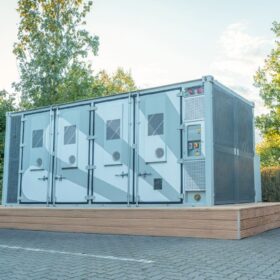
Europe’s largest sodium-ion battery installation goes live
Switzerland’s Phenogy has launched a megawatt-hour-scale sodium ion energy storage system at a commercial site near Bremen Airport in northern Germany. With this project, the Swiss manufacturer is making its debut on the European energy storage scene, backed by ambitions to develop fully vertically integrated local manufacturing.

Mexico launches tender for 300 MW solar plant
Mexican state-owned utility Comisión Federal de Electricidad (CFE) is seeking proposals for the Puerto Peñasco Secuencia III solar plant, which will also include 103 MW of battery capacity.
