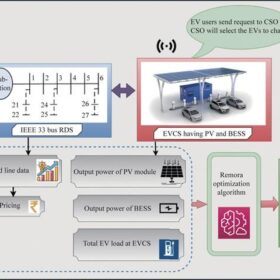
How to balance power losses, cost effectiveness in PV-BESS-driven EV charging stations
Scientists in India have developed a novel method to optimize the placement of an EV charging station on the grid, along with the size of its PV generation and battery storage. They have also created a framework for an innovative slot offering.
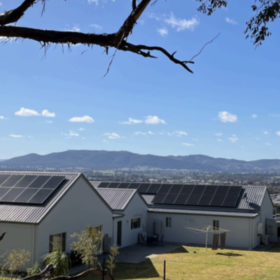
Australia installs 5.2 GW of solar in 2024
The International Energy Agency (IEA) says that Australia installed 5.2 GW of solar capacity in 2024, bringing the national total to 40 GW across distributed and utility-scale systems.

Luxembourg permits photovoltaics near motorways
Ministers in Luxembourg have agreed to allow the installation of solar systems alongside motorways and bypasses in road networks after an independent study estimated it could support up to 1.5 GW of new solar capacity.

EU finalizes €1 billion industrial heat decarbonization pilot auction
The IF25 Heat Auction will offer a fixed premium subsidy to projects that electrify industrial processes using technologies such as heat pumps, induction heating, solar-thermal and geothermal heat systems. The bidding window is expected to open in early December.
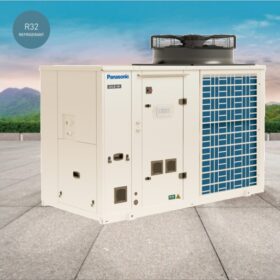
Panasonic launches new air-cooled heat pumps
The heating and cooling business of the Japanese giant has released a new range of heat pumps for commercial projects. The systems have capacities of 40 kW and 50 kW.

Paraguay set to host autonomous solar-powered data center
Sollar Machine plans to build a $9 million off-grid data center in Paraguay powered entirely by solar and batteries to deliver high-performance computing services for international clients, with a focus on AI.

Inside Europe’s C&I energy shift: Why the market now rewards innovation, trust and ESG alignment
EUPD Research says that with Europe’s solar market shifting towards larger systems, manufacturers, EPC companies and corporate buyers are adapting their portfolios and risk strategies.
France’s first simplified solar tender draws limited developer interest
France’s Ministry for Ecological Transition says a new 100 kW to 500 kW solar procurement round attracted far fewer compliant bids than its available capacity.
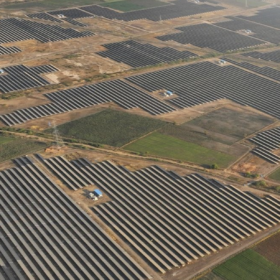
India’s solar additions rise as nine-month installations reach 26.6 GW
India added 26.6 GW of solar capacity in the first nine months of 2025, up 53.7% from a year earlier, with large-scale projects providing most of the growth, according to Mercom India.
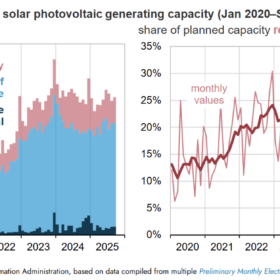
US utility-scale solar delays ease as market stabilizes
The US Energy Information Administration (EIA) says improving project timelines point to greater stability in the United States utility-scale solar pipeline.
