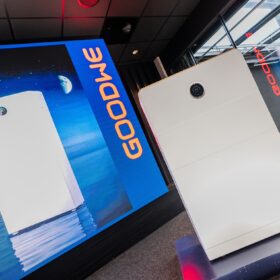
GoodWe introduces low-noise all-in-one storage system for rooftop PV
The three phase energy storage system encompasses the inverter, battery and energy management into a single system, suited for residential customers and scalable to the small-scale commercial and industrial market.

Toshiba rolls out AI-powered solar plant portfolio management platform
Toshiba has unveiled a PV management platform within its Spinex for Energy portfolio that enables real-time monitoring and O&M of multiple solar plants.
The system uses AI to track plant performance, detect faults, calculate capacity and PR metrics, automate reporting, and support troubleshooting.
New simulation platform lets energy operators train against realistic cyberattacks
Researchers at Germany’s Fraunhofer FKIE institute developed PowerRange, a virtual simulation platform that helps power grid operators safely test cybersecurity measures and respond to realistic cyberattacks. The platform supports both traditional and renewable grids, offering immersive training across IT, OT, and control systems while highlighting the importance of coordination, communication, and practical defense strategies.
Debt-laden South African municipalities may turn to solar-plus-battery backup solutions
Eskom says it is issuing notices against around 14 municipalities in South Africa over outstanding municipal debts. The company warns that if the municipalities do not take corrective action, it will take credit control measures that may include interrupting electricity supply at predetermined times.
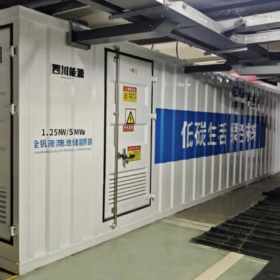
China commissions first urban underground vanadium flow battery system
China has deployed its first 1.25 MW urban vanadium flow battery (VFB), supporting peak AC loads and offering a safer alternative amid tighter lithium-ion storage regulations in dense urban environments.
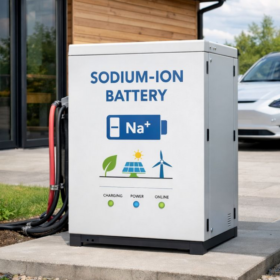
NanoMalaysia unveils sodium-ion prototype surpassing 300 Wh/kg
The new prototype ranks among the most advanced sodium‑ion battery systems reported worldwide.
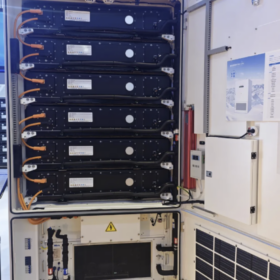
Hizenergy launches four-product C&I storage lineup with 300 kW PCS
Hizenergy has introduced a four-product commercial-and-industrial (C&I) energy storage lineup, including a 300 kW low-voltage PCS designed for direct connection to 400 V commercial distribution networks.

Volkswagen launches first large-scale battery storage project in Germany
Volkswagen has connected its first 20 MW/40 MWh stationary storage system in Salzgitter, Germany, marking the start of its plan to integrate battery production, storage, and energy trading within a single corporate structure.
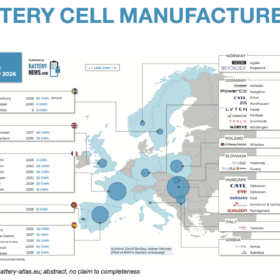
‘Battery Atlas 2026’ maps Europe’s cell, pack and battery manufacturers
The “Battery Atlas 2026” report shows consolidation in Europe’s battery market. More than 2,000 GWh of cell production capacity was announced in 2023, but the realistic forecast for early 2026 is around 1,190 GWh, including approximately 673 GWh led by Asian companies.

Thermocold debuts air-to-water heat pump for commercial buildings
The new product line covers 124–644 kW in heating and 128–632 kW in cooling, operates down to -15 C, and supports various configurations with R454B or R410a refrigerants.
