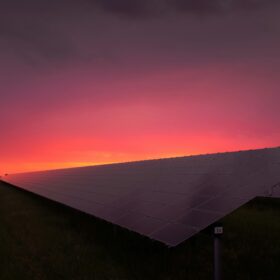
Renewables overbuilding, proactive curtailment can reduce Europe’s energy system costs
New research from the Netherlands showed that renewables and short-term storage can meet around 92.5% of Europe’s electricity demand in future energy scenarios, with the remaining 7.5% being satisfied by green hydrogen. The scientists considered Europe as fully self-sufficient with zero import-export of power or hydrogen, with each of the 37 countries included in the modeling having a self-sufficiency rate of at least 80%.
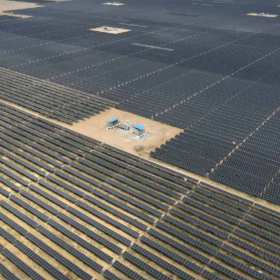
India on track to add more than 45 GW of solar in fiscal 2026
India installed 18 GW of solar in the first five months of fiscal 2026 and is projected to exceed 45 GW for the year, with rooftop and open-access systems driving growth alongside tax cuts and expanding manufacturing capacity.

Malaysian utility launches rebate program for residential PV
Sarawak Energy says it will grant rebates of up to $2,800 for PV systems planned to operate under Malaysia’s net metering scheme.

Enpal unveils residential heat pump for large heating loads
The German company is introducing its own heat pump with a heating output of up to 16 kW and a maximum flow temperature of 80 C. The system is designed to meet rising demand in large single-family homes and unrenovated existing buildings.

How rooftop solar can complicate residential real estate transactions
Many homeowners assume leased or loaned solar systems will boost their home’s value, but outstanding loans often drag down equity instead.

‘Preaching to the unconverted’ – EUPVSEC 2025 kicks off in Bilbao
The annual European Photovoltaic Solar Energy Conference (EU PVSEC) got underway today, this year in Bilbao. Conversations on the first morning focused on the need for strong policy support across multiple areas of renewable energy. While the week is sure to be filled with new ideas on the technological side, it’s clear that ensuring policies to support further growth in renewable energy is a growing challenge. Those working in the solar industry and research community need to reach a wider audience, and one that may not be as easy to convince.

Optimum tilt angle for PV systems ranging from 0° to 90°
A Slovak research team has developed a mathematical model for determining the optimum tilt angle of a solar system ranging from 0° to 90°. Their framework was tested on an experimental setup in Czechia and attained 93.9% accuracy in predicting the system’s energy balance.

Solar-Fabrik debuts back-contact solar module for residential, C&I applications
The German manufacturer said its full-black back-contact solar panel has a power conversion efficiency of up to 23.52%.
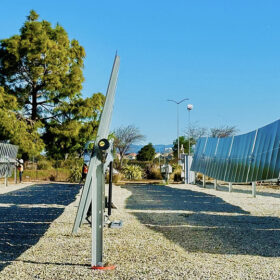
Hail damage to solar projects: 1% of filed claims, but over 50% of total losses
Hail damage has become a real headache for project developers in the United States, where growing deployment has increased exposure to weather-related risk. As project owners seek to limit the impact of hail on their bottom line, innovations in tracking systems and insurance can help.
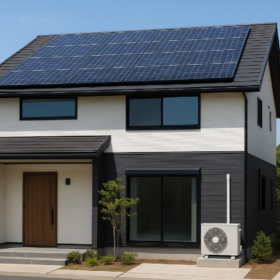
Making the business case for solar-plus-storage with heat-pumps in Japan
A Japanese research team has evaluated the affordability of photovoltaic-battery systems featuring heat-pump water heaters and air conditioning units across nine regions of Japan. They analyzed three price policies and two loan types, identifiying a tradeoff between net demand and cost according to the capacity of the solar-plus-storage system.
