
Solar inverters can detect cyberattacks but no one sees the signal
A King Abdullah University of Science and Technology (KAUST) researcher whose lab has demonstrated up to 100% accuracy using a single hardware counter tells pv magazine that firmware-level detection of inverter attacks is technically viable – but today’s communication standards do not transmit the firmware‑integrity signal to operators.

CATL raises $5 billion in share sale, Sungrow files for Hong Kong IPO for the second time
CATL has completed a roughly $5 billion share sale in Hong Kong on Tuesday. Meanwhile, Chinese inverter and battery manufacturing giant Sungrow is making a second attempt at an IPO after its initial listing bid, launched in October 2025, lapsed.

EU moves to restrict funding for projects using inverters from high-risk suppliers
The EU is moving forward with a plan to restrict funding for PV projects using inverters from high-risk suppliers, citing cybersecurity concerns and issuing new guidance to phase them out. A transition period applies for certain projects linked to the EU grid, while others must exclude such suppliers by 2027.

TBEA launches 500 kW string inverter
The new inverter is designed around standardized 5 MW and 5.5 MW PV sub-arrays with the aim to reduce balance-of-system costs. It features a maximum efficiency of 99.0% and a high-voltage architecture of up to 1,600 Vdc and 1,000 Vac.

Cyber threats for PV: What are supply chain attacks and how do they work
Supply chain attacks compromise PV systems by targeting trusted vendors, software, or hardware components, allowing attackers to infiltrate systems indirectly through legitimate channels. These attacks can disrupt operations, introduce hidden vulnerabilities, and impact multiple assets at once, making vendor security and system validation critical for resilience.

Pur Energy launches all-in-one battery–based home backup power solution
India-based Pur Energy has launched the PuREPower 3.0 Lite, an all-in-one lithium battery-based power backup solution positioned as a cleaner and more compact alternative to conventional inverter and lead-acid battery combinations for the residential segment.
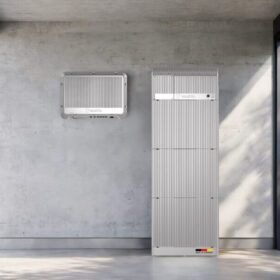
Varta launches all-in-one residential inverter and modular battery
The German manufacturer has launched an integrated energy system combining inverter, storage and energy management in a modular, scalable solution for new and existing PV installations. The system supports AC/DC coupling, backup power and smart energy optimization.

Cyber threats for PV: What are credential compromise attacks and how do they work
Credential compromise attacks allow adversaries to gain unauthorized access to PV systems by stealing or guessing valid login credentials, enabling them to manipulate operations, disrupt monitoring, or take control of critical assets. These attacks can lead to operational instability, reduced energy production, and safety risks, making strong authentication and access control essential for system resilience.
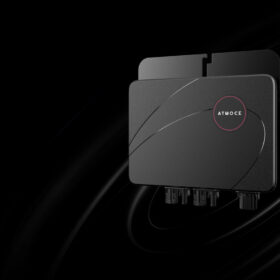
Atmoce debuts microinverter connecting two solar modules
Atmoce’s new MI microinverter series connects two PV modules per unit while still providing module-level power optimization.

U.S.-Israeli conflict with Iran tests solar supply
The U.S.-Israeli conflict with Iran is unlikely to materially affect solar manufacturing projects in the Middle East for now, as most of these investments remain at an early stage. OPIS analyst Brian Ng sees the most immediate risk in logistics. If disruptions persist, shipments of solar products into the region could be delayed and export pricing may turn volatile.
