
UK opens door to plug-in solar boom
In its first monthly column for pv magazine, UK-based consultancy Ricardo, part of the WSP Group, explain how UK will soon allow low-cost plug-in solar panels under 800 W to be installed without a qualified electrician, making home solar more affordable and accessible. These portable systems, expected on sale by summer 2026, could significantly boost household solar adoption while complementing the country’s wider renewable energy growth.
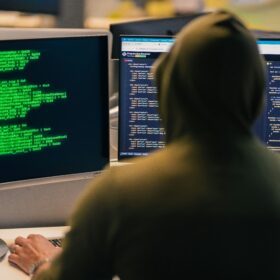
AI-enabled hacks expose remote shutdown risk in microinverters
IT security firm Jakkaru has identified a vulnerability in microinverters from AP Systems that could enable a “kill switch” scenario, potentially shutting down tens of thousands of inverters simultaneously and disrupting grid operations.

TBEA unveils grid-forming converter for large-scale storage, renewables
Chinese power transformer manufacturer TBEA introduced a grid-forming string power conversion system (PCS) for utility-scale storage, renewable energy base projects, and weak-grid applications. The TE435/392K-HV-BL high-power converter focuses on improving power density and grid support. According to TBEA, its fully integrated liquid-cooling design increases volumetric power density by 78% and gravimetric power density by 32% […]

SMA Solar Technology confirms wider loss for 2025 on weak PV market
SMA Solar Technology AG says revenue declined slightly and losses widened significantly in 2025 due to weak demand and one-off effects from its restructuring program.

Smart meters are vulnerable gateways to cyberattacks
Researchers found that widely deployed smart meters pose a “massive” cybersecurity risk, potentially enabling data manipulation, energy theft, and service disruption. They propose a new detection method using state estimation and statistical boundaries to more accurately identify cyberattacks, outperforming traditional techniques despite higher computational demands.

Solar cyber threats expand, but inverters still stay in the crosshairs
In an interview with pv magazine, Jay Johnson, the CTO of US-based cybersecurity firm DERSec, explains that PV systems face cybersecurity risks that extend far beyond inverters, as demonstrated by a December attack on Polish solar plants where wiper malware targeted substation equipment rather than the inverters themselves. Vulnerabilities often lie in backhaul communication channels like APIs and mobile apps, making layered defenses, network segmentation, and vigilant monitoring essential to safeguard distributed energy resources.
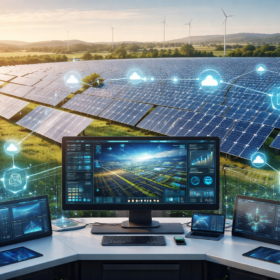
German startup offers team of 22 specialized AI workers for PV plant O&M operations
Invertix has launched 22 specialized AI “workers” to automate O&M tasks for renewable energy assets, targeting inefficiencies in data handling, alarm management, and reporting. The startup says its system enables PV plant operators to scale portfolios more efficiently by reducing manual workloads, while keeping humans in the loop for critical decisions.
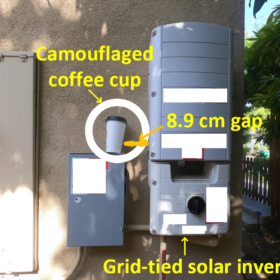
When tiny magnets attack PV systems
In an interview with pv magazine, cybersecurity expert Mohammad Al Faruque explains how seemingly simple sensors in PV systems and other energy systems are surprisingly vulnerable to magnetic, electrical, and acoustic perturbations, which can remotely influence control systems without physical access. Protecting these sensors requires both strict physical security and the development of hardened, interference-resistant technology to safeguard critical infrastructure.
Iran conflict stirs solar demand debate in Germany
Germany’s solar sector is reporting a surge in inquiries following the military escalation between Israel, the United States, and Iran, with E.ON citing a doubling of demand for solar installations. Other industry participants are more cautious, attributing much of the increase to seasonal patterns rather than geopolitical anxiety.
Solar and the cyber winter
In an interview with pv magazine, cybersecurity expert Roberto Setola describes a structural shift in cyber threats against solar energy infrastructure, where attacks now target peripheral systems like remote terminal units rather than centralized SCADA, often in coordinated campaigns amplified by AI. He also emphasized that the recent cyberattack to PV plants in Poland demonstrated how simultaneous strikes on smaller, less-protected operators can potentially trigger major disruptions, including blackouts, economic losses, and cascading grid risks.
