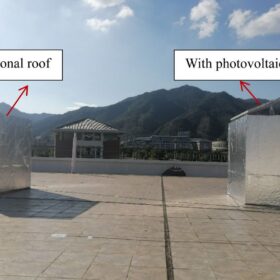
New research suggests optimal tilt angle, overhead height for rooftop PV systems
Researchers in China have investigated the effect of the overhead height and tilt angle on thermal and energy-saving performance of photovoltaic roof and have found that the comprehensive energy-saving efficiency of parallel overhead photovoltaic roofs are optimal in summer and the worst in winter.

Chinese PV Industry Brief: Huasun secures 3 GW HJT solar panel order
Huasun Energy says it has signed a 3 GW supply deal with Hongyang New Energy Development Group for heterojunction (HJT) solar panels. The PV modules will be used in Hongyang’s solar-plus-storage hydrogen-ammonia projects in China’s Xinjiang region, with delivery set by the end of 2026.

Philippines certifies 17.6 GW of renewables under CEPNS program
The government of the Philippines issued Certificates of Energy Projects of National Significance (CEPNS) for 149 power and transmission projects between May and December 2024, covering 91 renewable energy projects totaling 17.6 GW of capacity.
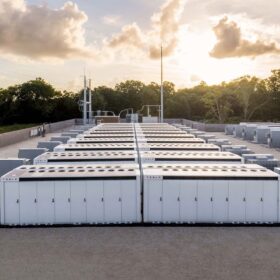
Tesla begins production at Shanghai Megapack Factory amid intensifying price war
Tesla’s first overseas energy storage plant starts operating as global competition from Chinese firms and pricing pressures mount.

Panasonic launches decentralized water-to-air heat pumps
The Aquarea Loop heat pump system is intended for applications in residential and commercial buildings. It features a coefficient of performance of up to 5.9 and heating capacities ranging from 1.10 kW to 3.10 kW.

Trina Solar sues Canadian Solar over patents in $147 million lawsuit
Trina Solar has filed a lawsuit against Canadian Solar and its subsidiary, seeking $147 million in damages for alleged infringement of tunnel oxide passivated contact (TOPCon) cell patents. The case, accepted by the Jiangsu High Court, underscores the rise of intellectual property disputes in China’s competitive solar sector.

Waaree commissions first phase of 5.4 GW solar cell factory
Waaree Energies has started commercial production from the first 1.4 GW of its planned 5.4 GW solar cell manufacturing capacity in Gujarat, India.
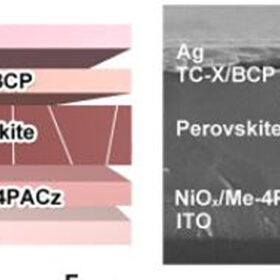
Inverted perovskite solar cell based on stabilized C60 achieves 25.6% efficiency
An international team has utilized an n-type polymeric additive to stabilize C60 molecules for use in inverted perovskite PV cells. Thanks to this approach, the researchers built a solar cell with the highest efficiency value ever recorded for perovskite devices based on solution processed C60 electron transport layers.

Maldives tenders up to 150 MW of solar
The Ministry of Finance and Planning of the Maldives is seeking a developer for the installation of a 100 MW to 150 MW solar project. The deadline for expressions of interest is Feb. 27.

Deye debuts off-grid inverters for residential PV
Deye said its new single-phase off-grid inverters have an AC output power ranging from 3.6 kW to 6 kW. The systems feature a maximum efficiency of 97.6% and a European efficiency rate of 96.5%.
