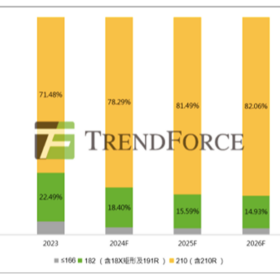
TrendForce says 210 mm module shipments surpassed 260 GW in Q1
Market intelligence platform TrendForce says 210 mm n-type technology is “set to spearhead a new industrial revolution.” It expects 210mm modules to account for 78.29% of the large-format module market this year, increasing to 82.51% by 2027.
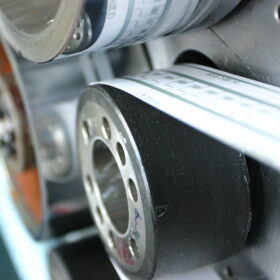
Using digital twin, roll-to-roll platform to design high-performance organic PV devices
An international team of researchers have demonstrated how to speed up the research and development of scalable, high-performing organic solar cells by using an automated, high-throughput platform. It relies on digital twin technology and roll-to-roll (R2R) printing in a closed-loop system.
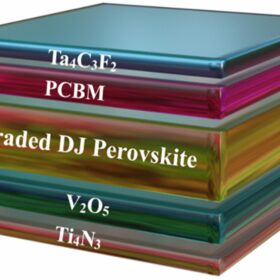
2D Dion-Jacobson perovskite solar cell based on MXene contacts achieves 17.47% efficiency
Scientists in India have combined 2D perovskite solar cell technology with MXenes materials to build a PV device with remarkable efficiency and open-circuit voltage. They claim the new cell architecture is key to helping charge carriers move smoothly through the cell layers and reduce recombination losses.

TBEA launches new 1,500 V string inverter
TBEA has developed a new 1,500 V string inverter with a maximum efficiency of 99.02%, maximum power point tracking (MPPT), a maximum input current of 65 A, and a maximum short circuit current of 115 A.
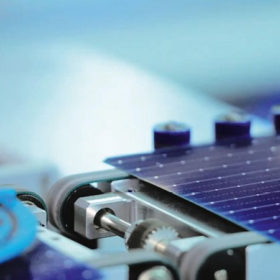
Chinese PV Industry Brief: JinkoSolar’s TOPCon module shipments pass 100 GW
Chinese solar module maker JinkoSolar says it has shipped more than 100 GW of tunnel oxide passivated contact (TOPCon) modules in just 18 months.
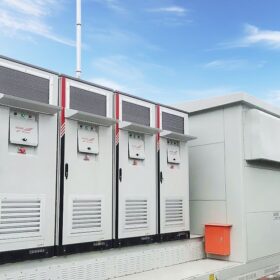
World’s first grid-scale, semi-solid-state energy storage project goes online
The 100 MW/200 MWh energy storage project featuring lithium iron phosphate (LFP) solid-liquid hybrid cells was connected to the grid near Longquan, Zhejiang Province, China.
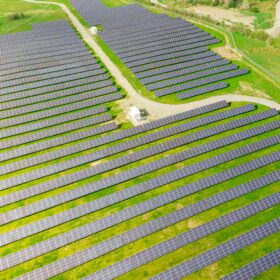
Vietnam opens energy market to bilateral PPAs
The Vietnamese government issued new rules this week allowing direct power purchase agreements (DPPA) between independent power producers (IPPs) and energy consumers, according to state-owned media. IPPs can now sell power to final clients via the national grid or direct connection lines.
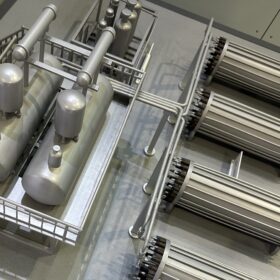
India launches several green hydrogen tenders
Mangalore Refinery and Petrochemicals has started accepting bids to build, own, and operate a green hydrogen plant to supply 10 kilotons per annum (ktpa( of green hydrogen. It says it will sign a 25-year gas purchase agreement with the successful bidder.

Solar cell based on high-entropy hybrid perovskite achieves 25.7% efficiency
Researchers in China have built for the first time an inverted perovskite solar cell relying on a high-entropy hybrid perovskite material. The result is a device with an improved open-circuit voltage and fill factor, due to reduced non-radiative recombinations and optimized interface.

China could lead the world to net zero
China, with an 18% share of the global population, uses 26% of the world’s primary energy and emits 33% of the world’s energy-related CO2. The energy transition unfolding in the country isn’t merely a national affair as its ramifications echo globally, explains Mahnaz Hadizadeh, a researcher for consultancy DNV.
